
When Painkillers Make Your Breathing Worse
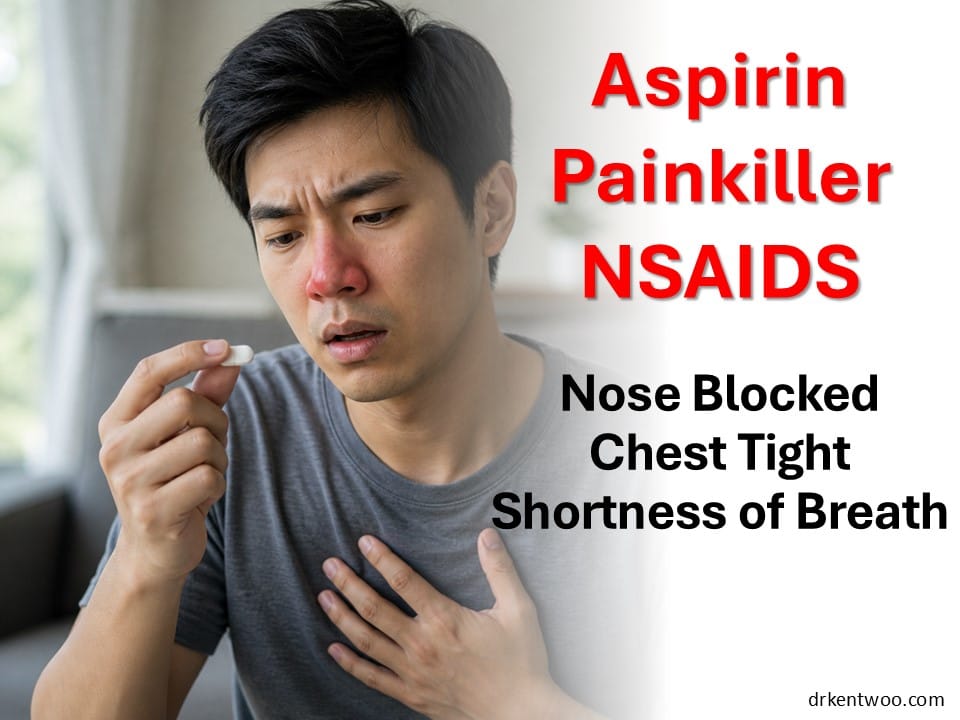
You took a painkiller.
For a headache.
For body aches.
And instead of relief…
Your nose blocked.
Your chest tightened.
Your breathing worsened.
That’s not “just asthma.”
That’s something else.
Aspirin Exacerbated Respiratory Disease (AERD)
Also known as NSAID Exacerbated Respiratory Disease (NERD)
The Pattern Most People Miss
AERD isn’t random.
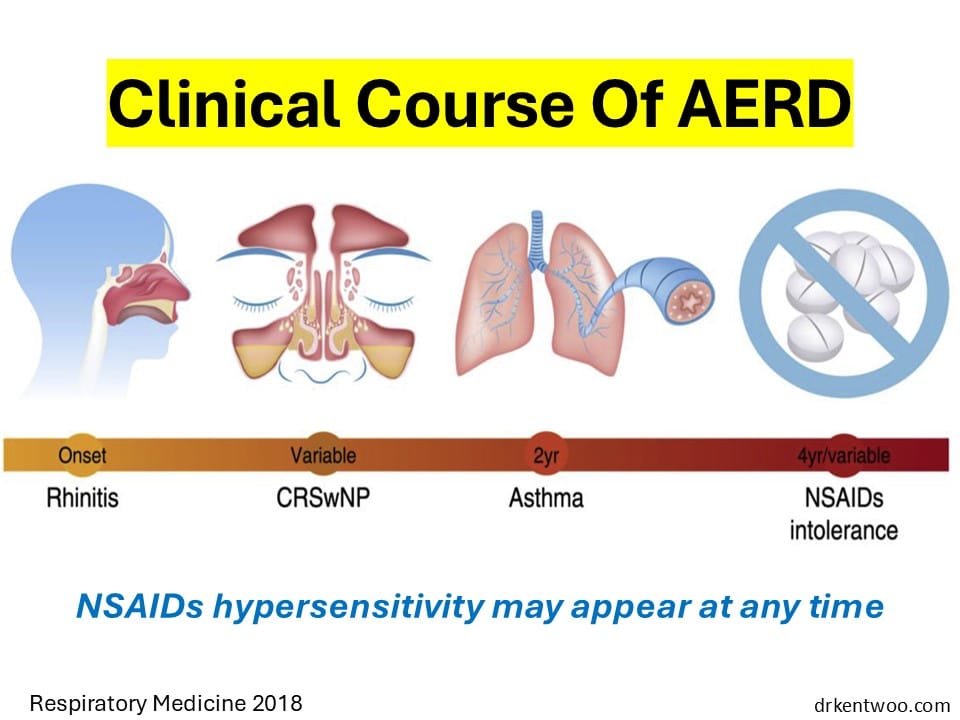
It follows a pattern:
👉 Chronic sinus issues
👉 Sometimes nasal polyps
👉 Asthma
And then:
👉 You take aspirin or an NSAID
👉 Symptoms suddenly flare
This used to be called Samter’s triad.
Today, we call it AERD.
A Patient Encounter
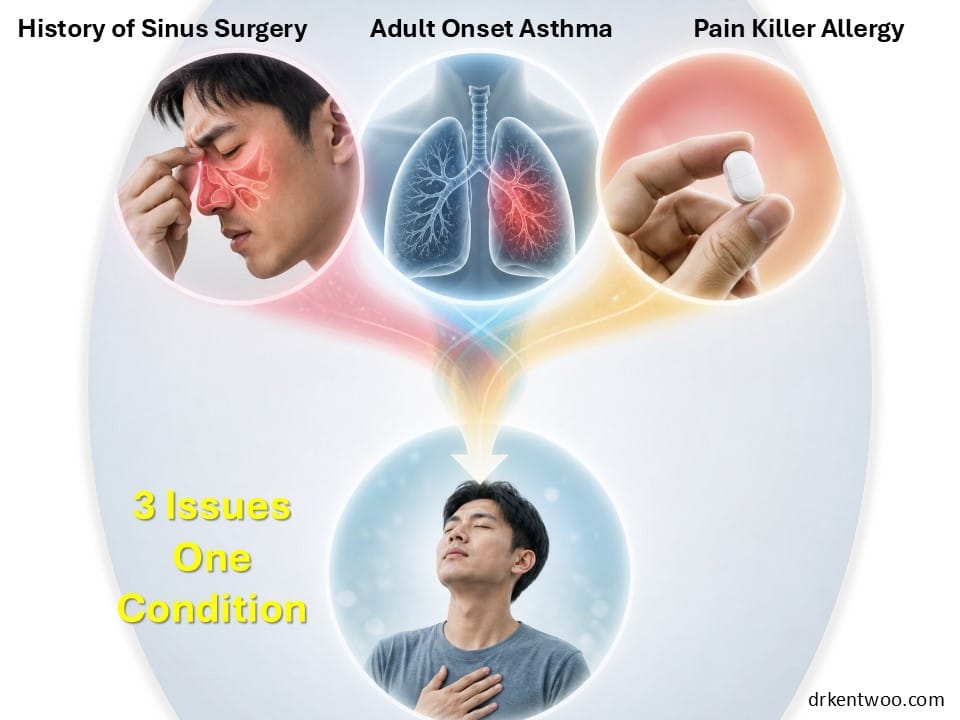
A patient once told me:
“Doctor, I thought I had three separate problems—sinus, asthma, and a painkiller allergy.”
This patient had sinus surgery.
Then developed asthma.
Couldn’t breathe after taking Motrin (ibuprofen). Same thing happened after using Voltaren (diclofenac)
“I never realized they were all connected.”
They weren’t three problems.
👉 They were one condition.
A Small But Important Clarification
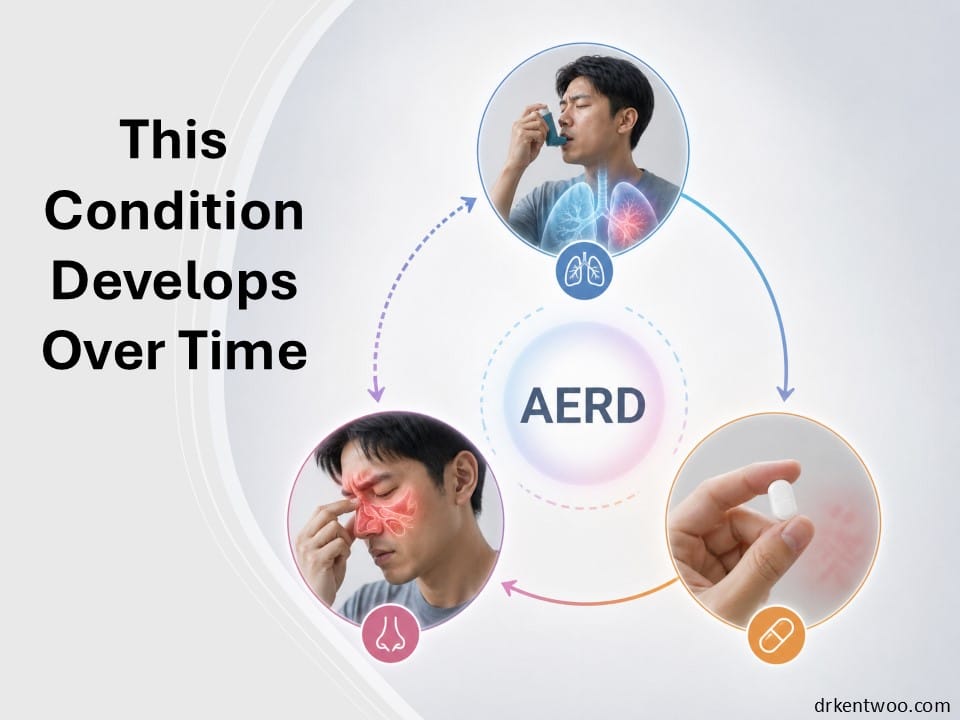
Here’s where real life differs from textbooks.
We often describe AERD as a “triad”:
👉 Sinusitis with nasal polyps
👉 Asthma
👉 Reaction to NSAIDs
But not everyone fits neatly into this box.
👉 Not all patients with nasal polyps have AERD
👉 Not all AERD patients have nasal polyps (especially early on)
👉 Not all patients with sinus + asthma will react to NSAIDs
AERD is not a checklist.
👉 It’s a condition that evolves over time
Sometimes:
- Asthma comes first
- Sometimes sinus disease comes first
- Sometimes the medication reaction is the first clue
More Common Than You Think
- Up to 15% of asthma patients may have AERD
- Even higher in those with nasal polyps
- And often… missed
Because it develops slowly.
It can take years—sometimes 5 to 12 years—for the full picture to appear.
So the connection is often overlooked.
What’s Happening Inside Your Body
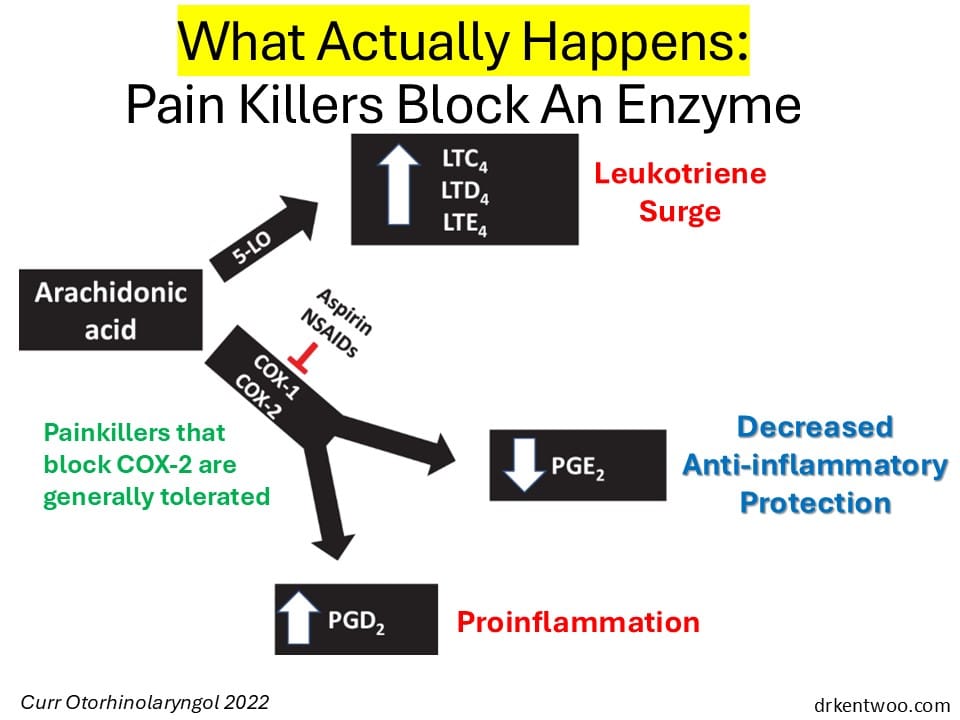
Think of it as a chemical imbalance.
👉 Prostaglandins – the “peacekeepers”
👉 Leukotrienes – the “fire starters”
In AERD:
- Too little calming signal
- Too much inflammatory signal
Then you take an NSAID…
👉 The calming pathway is blocked
👉 The inflammatory pathway surges
And suddenly:
🔥 Airways tighten
🔥 Sinuses swell
🔥 Symptoms hit
What Symptoms Should You Watch For?
Usually within 30 to 180 minutes after NSAIDs:
- Severe nasal blockage
- Runny nose
- Wheezing
- Shortness of breath
And one important clue:
👉 Loss of smell
Often the most frustrating symptom for patients.
Why This Condition Feels So Difficult
This isn’t just asthma + sinusitis.
It’s more persistent. More stubborn.
Patients often:
- Have recurring sinus problems or polyps
- Need repeated treatments or surgery
- Rely on steroids
- Still don’t feel fully well
Over time—it becomes exhausting.
What Should You Avoid?
If you have AERD:
🚫 Traditional NSAIDs:
- Aspirin
- Ibuprofen
- Naproxen
- Ketorolac
Because they trigger the same pathway.
What Can You Take Instead?
Safer options (with guidance):
✅ Paracetamol (acetaminophen) – generally safe at standard doses
⚠️ Higher doses may still trigger symptoms in some
✅ Selective COX-2 inhibitors (e.g. celecoxib) – usually tolerated
Always check with your doctor.
What Can Be Done For This Condition?

Avoiding NSAIDs is one approach.
In selected cases, there’s another:
Less Common – Aspirin Desensitization
This involves:
👉 Gradual dosing under medical supervision
👉 Followed by daily aspirin to maintain tolerance
It can help:
- Improve symptoms
- Reduce nasal polyps
- Support asthma control
But it’s not suitable for everyone.
And today, with newer targeted treatments available, it’s used more selectively than before.
Newer Effective Treatments
This is where things have really changed.
We now have biologic therapies that target the underlying inflammation:
- Anti-IgE
- Anti-IL5
- Anti-IL4/IL13
- Anti-TSLP
These treatments can:
👉 Shrink nasal polyps
👉 Improve breathing
👉 Reduce steroid dependence
And in many cases—
👉 Work particularly well in AERD
When Should You Suspect AERD?
Think about this if you have:
- Asthma that’s hard to control
- Chronic sinus problems (with or without polyps)
- Symptoms that worsen after painkillers
That combination?
👉 Not coincidence
👉 It’s a pattern
The Bottom Line
AERD is:
- A distinct inflammatory condition
- Driven by a chemical imbalance
- Triggered by NSAIDs
And most importantly:
👉 It is treatable
👉 It is manageable
👉 And often overlooked
Final Thoughts
If you’ve ever wondered:
“Why does my breathing get worse after certain painkillers?”
Don’t ignore that clue.
Because once you recognize the pattern
You can finally treat the problem properly.