Unveiling the Hidden Danger: Wheat Allergy from Skincare Products
“Huh, doctor! You mean I have wheat allergy?
How can? I’ve been eating wheat all my life!”
If I had a ringgit for every time a patient said this, I’d be able to buy all the roti canai in SS2.
But yes — this is happening.
People with zero past allergy… suddenly becoming allergic to wheat.
And the surprising culprit?
Their skincare.
When Skincare Turns into a Sensitizer
Most people think of skin as just… skin.
A barrier. A cover. A wrapper.
But here’s the medical truth:
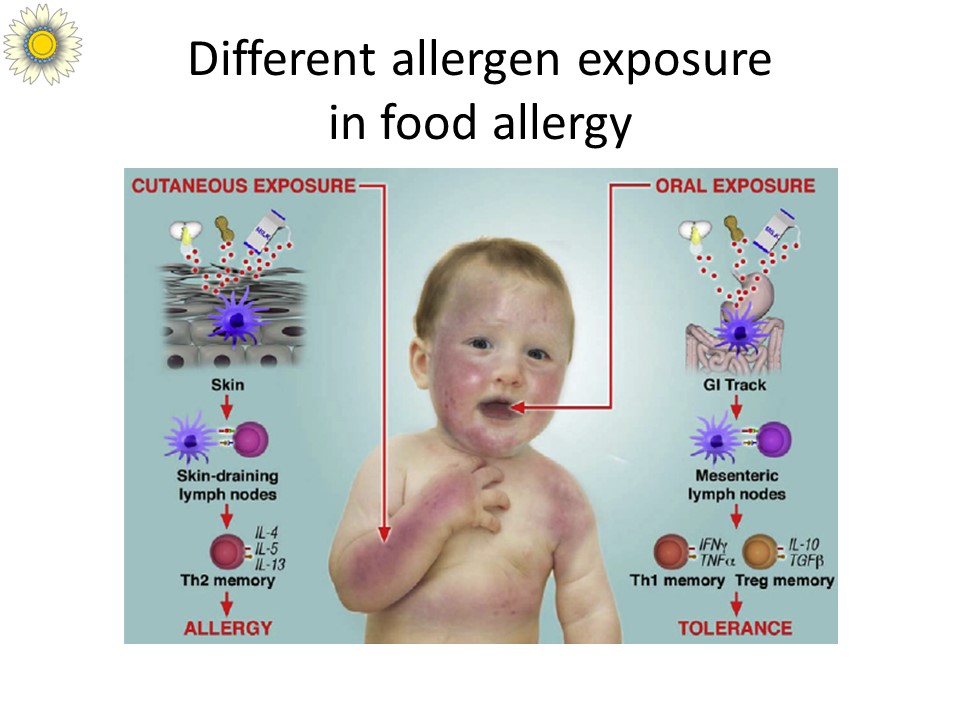
Your skin is also an immune organ.
Especially in people with eczema — where the skin barrier is cracked, inflamed, and leaky — allergens can slip in through the skin, train the immune system the wrong way, and create food allergies, even to foods they’ve been eating for decades.
And for some, that allergen is wheat proteins hidden in lotions, shampoos, and soaps.
The Rise of Wheat Allergy from Skincare
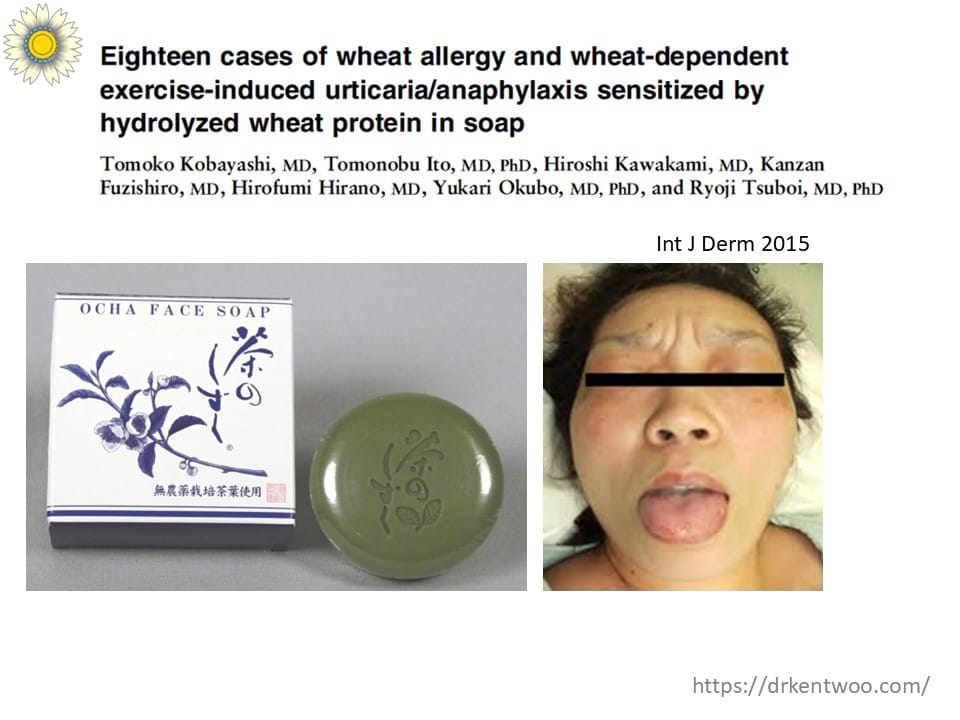
Traditionally, wheat allergy develops from eating wheat.
But now, we’re seeing cases from topical exposure — from skincare containing:
- Triticum vulgare
- Hydrolyzed wheat protein
- Wheat germ extract
- And sometimes… not labeled at all 😑
Patients use these products daily.
The skin becomes sensitized.
Then one day, they eat ramen or a slice of pizza… and suddenly react.
I’ve seen it.
Many times.
And no — this isn’t rare anymore.
Two Types of Wheat Allergy I’m Seeing
1️⃣ Classic Wheat Allergy (No Exercise Needed)
A big group of my patients react simply from eating wheat:
- Urticaria (hives)
- Angioedema (swelling)
- Wheezing
- Stomach cramps
- Vomiting
- Full-blown anaphylaxis
No running.
>No Zumba.
>No jogging after makan.
Just wheat → reaction.
These patients often say:
“But doctor, I ate bread yesterday and I was fine!”
Yes — that happens.
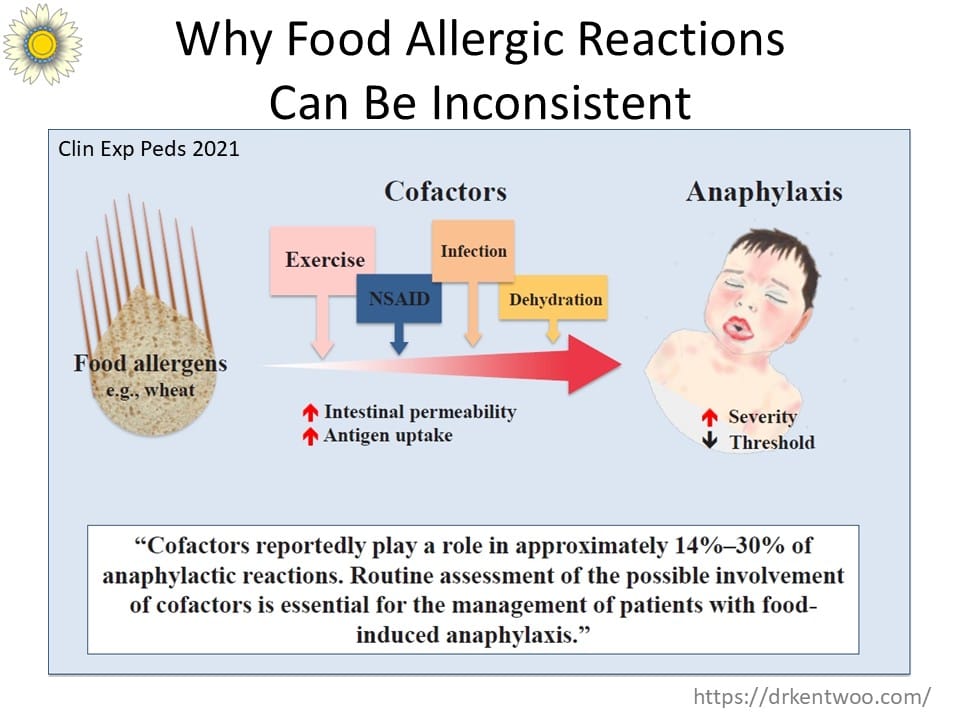
Allergies can fluctuate, depending on:
- Co-factors (sleep, stress, illness)
- Amount of wheat
- Type of wheat (pure gluten = higher risk)
- Other allergies
- Menstrual cycle
- Medications
Allergy is messy. Not always predictable.
2️⃣ Wheat-Dependent Food Exercise-Induced Anaphylaxis (FDEIA)
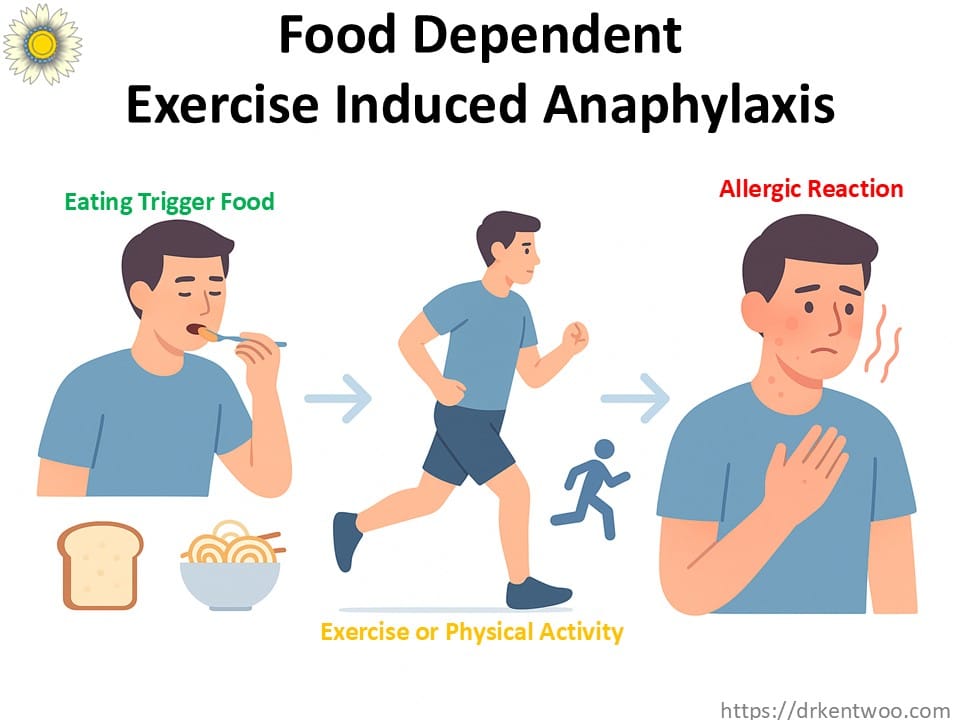
Now, the confusing one — the famous Wheat Dependent FDEIA.
Here’s how it works:
- You eat wheat.
- Then you exercise.
- Only then the reaction happens.
No wheat → no problem.
No exercise → also no problem.
Combine them → big problem.
Classic Malaysian examples:
- Roti canai → futsal → anaphylaxis
- Ramen → gym → hives
- Pita wrap → jogging → wheezing
And many people don’t even realize wheat is hidden in:
- Pizza dough
- Chinese vegetarian “gluten” dishes
- Noodles
- Cakes & pastries
- Even some sauces
And here’s the twist:
Some individuals can react to pure gluten even without exercise.
I’ve seen patients react just from eating those Chinese vegetarian gluten dishes alone.
So exercise is not always required — especially when the wheat protein dose is high enough.
The Big Question: Why Does Skincare Trigger This?
That’s the million-dollar question I keep asking.
Putting wheat in skincare causes problems — so what’s happening?
Is it:
- The size of the protein?
- The way it’s processed?
- The chemical modifications?
- The surrounding formulation?
- The damaged skin barrier allowing easier penetration?
Something about these formulations is strong enough to break oral tolerance and create allergy through the skin.
We need more research.
A lot more.
⚠️ It is not only wheat in skin care causing food allergy, other food proteins too! [Click here to find out more]
If You Developed Wheat Allergy from Skincare
Stop using skincare with wheat derivatives.
Sounds easy, right?
Not always.
Because wheat can hide under fancy INCI names:
- Triticum vulgare
- Hydrolyzed wheat protein
- Wheat amino acids
- Wheat germ extract
And sometimes…
it’s not even on the label.
This makes avoidance tricky — but not impossible.
Diagnosis & Treatment
If you suspect wheat allergy:
- See an Allergist/Immunologist
- Get skin prick tests
- Get blood IgE tests
- Identify co-factors
- Understand your threshold
- Create a personalized plan
Because this condition is not one-size-fits-all.
Some patients can still eat wheat if they avoid exercise.
>Some must avoid large amounts.
>Some must avoid it entirely — at least for a while.
And some, with careful management, outgrow the allergy.
The Good News

Remission happens in about 50% after 5 years.
And I believe with:
- Proper skincare avoidance
- Barrier repair
- Managing eczema
- Controlling other allergies
The remission rate may be even higher.
Final Thoughts
The emergence of wheat allergy from skincare shows how complex and interconnected our immune system truly is.
Food isn’t always the enemy.
Sometimes, it’s what we put on our skin that starts the trouble.
And as clinicians, consumers, and product formulators —
we need to stay alert, ask better questions,
and push for better research.
Because the real mystery remains:
How does wheat in skin care formulations cause allergy in previously non allergic individuals?
Until we know… vigilance is our best protection.