
Suspicion Around Doctors Who Earn Well
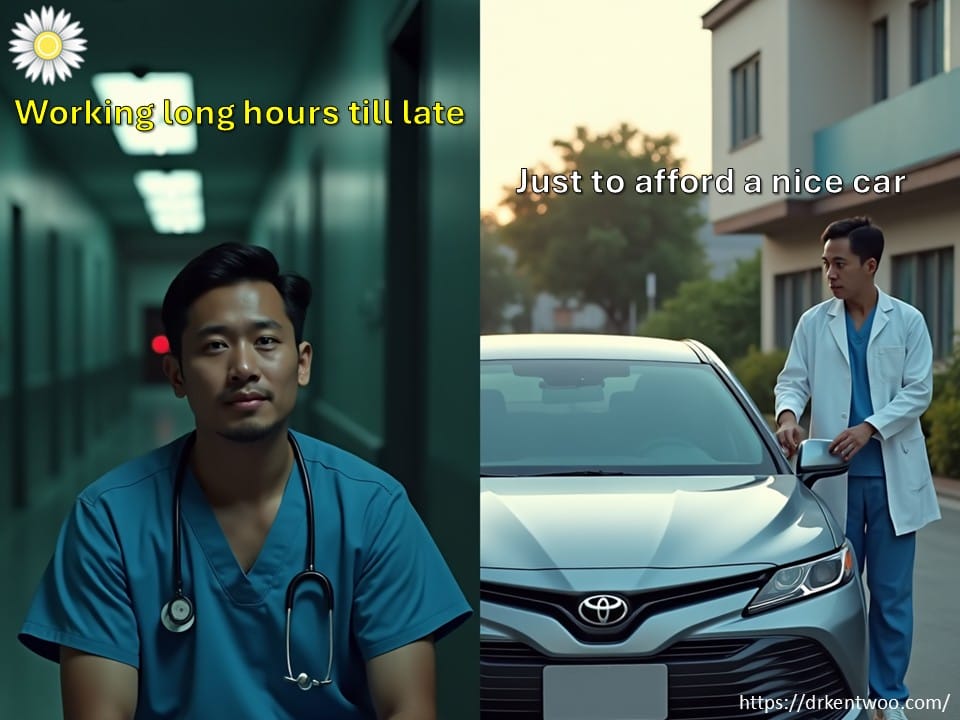
As a doctor, these are some of the things I hear
A doctor neighbor got a new car.
Bright yellow, sporty, the electric MG.
Whispers started, Wah how he can afford the car?
Doctor can make so much money!
Must be doing extra surgery
Aiyah, charges increased la!
Even From the same profession,
The other day,
A colleague got a new car,
Not a sports car.
Not a luxury brand that would turn heads.
Just a good car after years of practice.
Within days the jokes started at the doctor’s rest area.
“Must be taking out extra appendix”
Next year after selling some kidneys can get Porsche ya?
Everyone laughed.
But beneath the humor there was something familiar
A quiet suspicion that appears whenever a doctor begins to live comfortably.
It is rarely said directly.
But the message is clear.
A doctor earning money makes people uneasy.
Even within the profession, there is subtle snubbing.
The Unspoken Rule
Society expects a great deal from doctors.
Doctors must study longer than most professions.
>Doctors must work nights while others sleep.
>Doctors must carry decisions where mistakes are measured in human consequences.
But the moment that doctor begins to do well financially, the conversation shifts.
People start to ask uncomfortable questions.
“Why are doctors paid so much?”
“Are they charging too much?”
“Are they doing unnecessary procedures?”
Success in medicine often comes with suspicion.
The Double Standard

When a corporate lawyer charges enormous fees, people say he is successful.
When a tech entrepreneur becomes wealthy, people call it brilliant.
When an investment banker earns millions, people describe it as ambition.
But when a doctor finally earns well after more than a decade of training, the tone changes.
The success becomes morally uncomfortable.
Almost as if healing people should come with a financial ceiling.
The Road Most People Never See
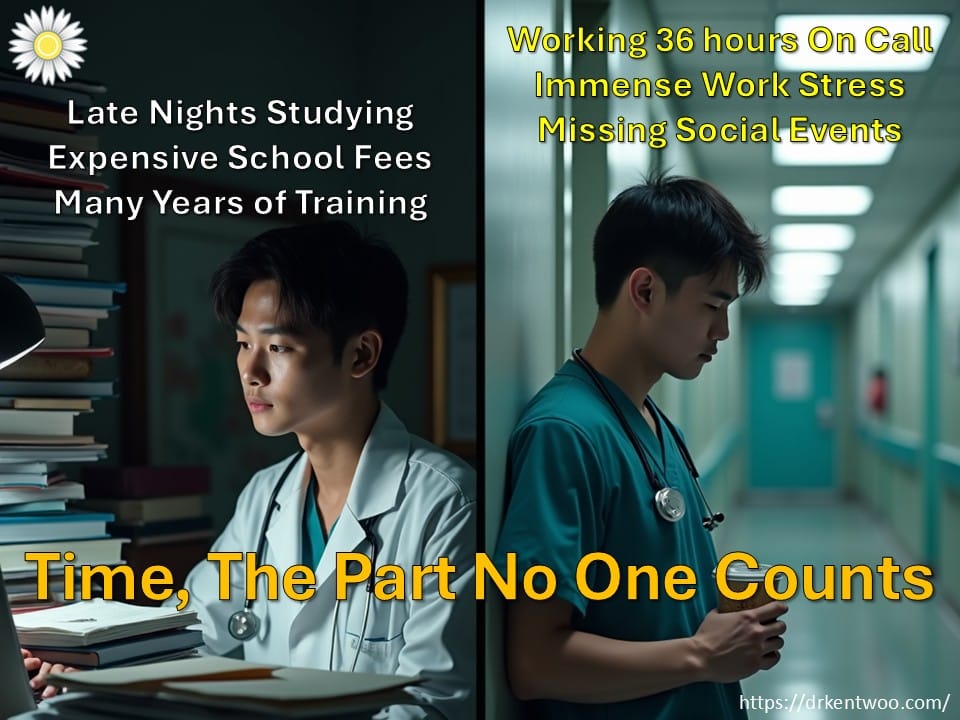
What people rarely see is the long road behind that moment of success.
The years when classmates from school were already earning while the future doctor was still studying.
The nights in emergency rooms.
The residency shifts that stretch well beyond a normal working day.
The financial reality is also rarely discussed.
In many countries, medical education alone can cost well over USD$250,000.
By the time training is complete, many doctors carry hundreds of thousands in debt.
And after graduation, the learning does not end.
Residency training often involves 60–80 hour work weeks, where young doctors take on real responsibility for patient care while earning relatively modest salaries.
If calculated purely by the hour, some trainees earn close to the equivalent of minimum wage.
While their peers from university may have spent a decade building careers, investing, and accumulating savings, young doctors are still completing training.
The difference is not just income.
It is time.
Time spent learning.
>Time spent serving.
>Time spent delaying financial stability.
The Hidden Mathematics of the Profession
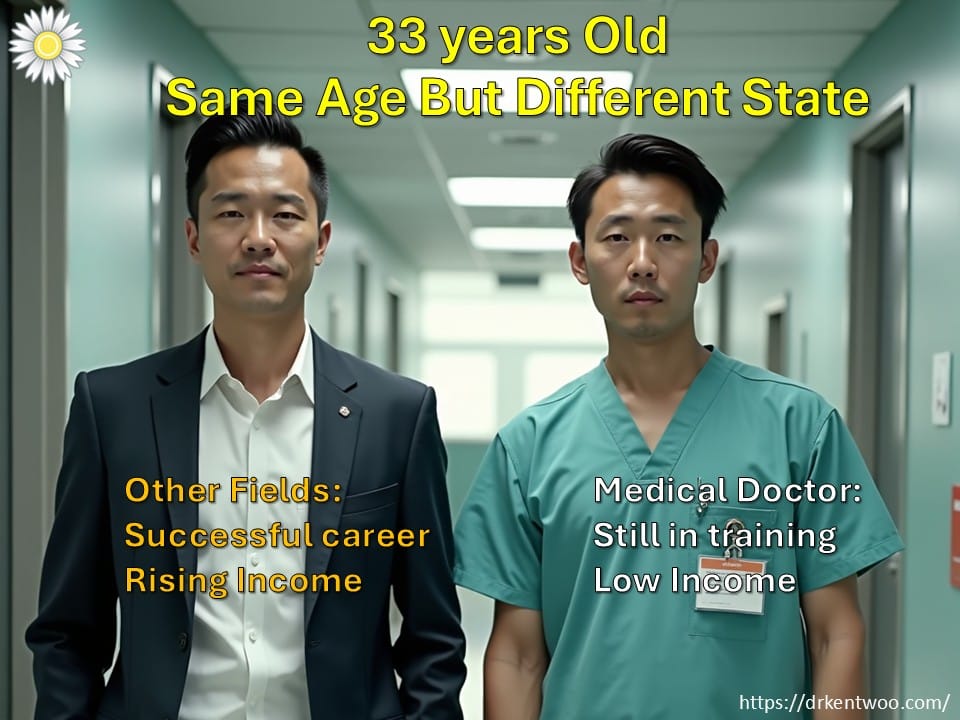
There is another number few people consider.
Opportunity cost.
Imagine two university graduates at age twenty-two.
One begins working immediately and invests part of their income each year.
With steady growth over a decade, those early investments can compound significantly.
Meanwhile, the future doctor spends those same years studying, training, and accumulating debt.
Many physicians only begin independent practice in their early to mid-thirties.
Financially speaking, they are starting a race that others began more than ten years earlier.
Medicine eventually becomes stable.
But the road to get there is long.
What It Really Means to Be a Doctor
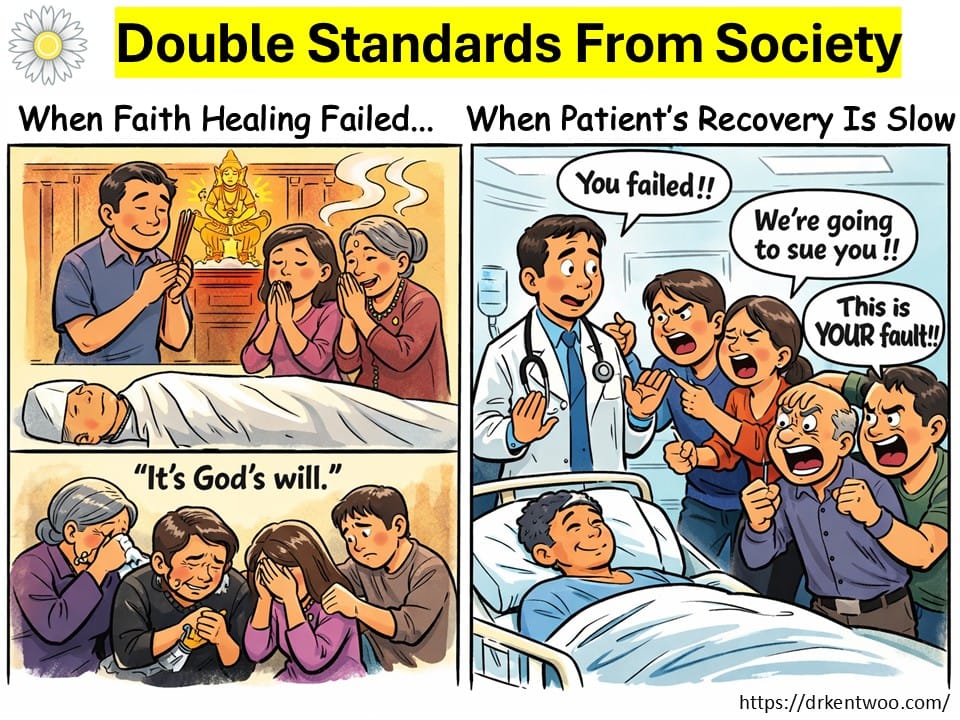
Medicine is not simply a career.
It is a responsibility that most people never fully see.
It means staying awake while the rest of the city sleeps.
It means making decisions where uncertainty is unavoidable but action cannot wait.
It means explaining years of training to someone who read a paragraph online and believes they now understand the problem.
Patients hope for miracles.
Systems often treat doctors as replaceable staff.
And when outcomes go wrong, the doctor is usually the easiest person to blame.
Yet every morning, doctors return to the hospital and clinic and do it again.
A Question Worth Asking
None of this means doctors should be immune from criticism.
Medicine must always be accountable.
But perhaps the more important question is this.
If the people responsible for protecting life must constantly defend their right to live decently after dedicating their lives to this work…
Who exactly will want to become doctors tomorrow?