Eczema and Skin Infections:
Why Controlling Inflammation Matters
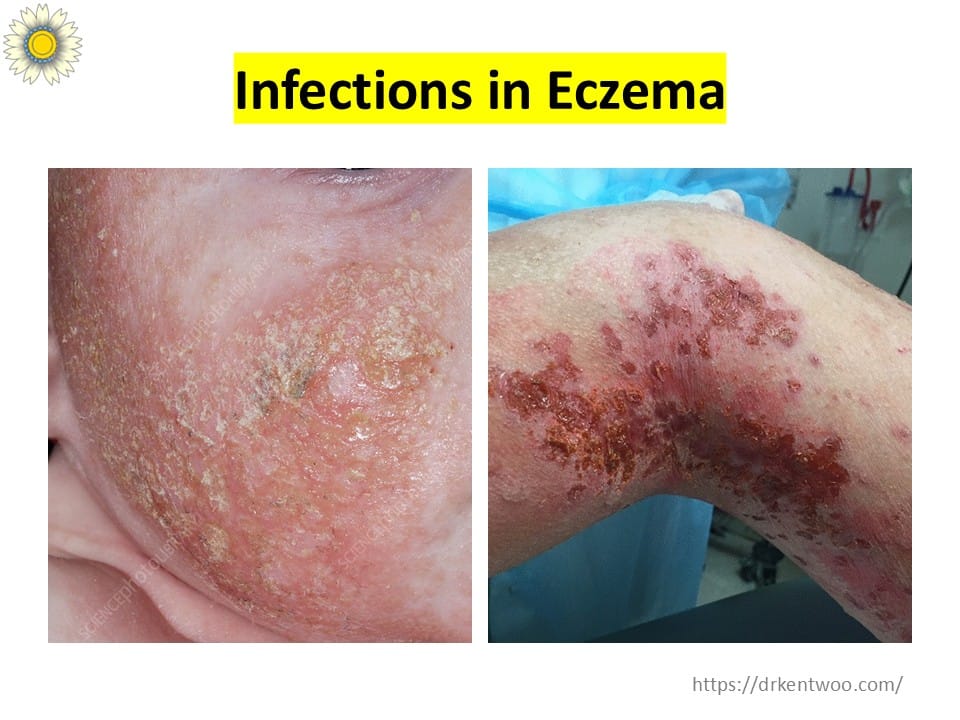
“Doctor, I’ve seen so many specialists.”
“My child’s eczema keeps flaring. Sometimes it gets infected.”
“Sometimes I’m not even sure if it’s an infection.”
“And honestly, I’m scared to use the medicated creams.”
“I worry the medication suppresses the immune system and makes the infections worse, so sometimes I stop them.”
“Some of my friends even tell me it’s because my house isn’t clean enough.”
“But I clean every day. My house is spotless.”
“Doctor, I really don’t know what to do anymore.”
If this sounds familiar, let me explain what may actually be happening.
Because eczema is not simply a problem of dirty skin.
And recurrent infection does not necessarily mean you have a dirty home or a weak immune system.
There is a much more complicated relationship between inflammation, the skin barrier, and the bacteria living on the skin.
Why Does Eczema Get Infected?

One of the most important bacteria involved is Staphylococcus aureus, commonly known as Staph.
Eczema skin is much more likely to be colonized by S. aureus than healthy skin.
And there is an important distinction:
Colonization is not the same as infection.
Staph can live on the skin without causing an active infection.
But it matters.
It’s like sleeping with enemy
When the skin barrier is damaged, the balance can change.
Inflammation weakens the barrier.
Scratching creates tiny breaks.
Bacteria can multiply more easily.
And sometimes, infection follows.
So the cycle can look like this:
Eczema → inflammation → scratching → barrier damage → bacterial overgrowth → infection.
And once infection develops, it can make the eczema even harder to control.
Your Skin Has Its Own Defense System
Your skin is not just a covering.
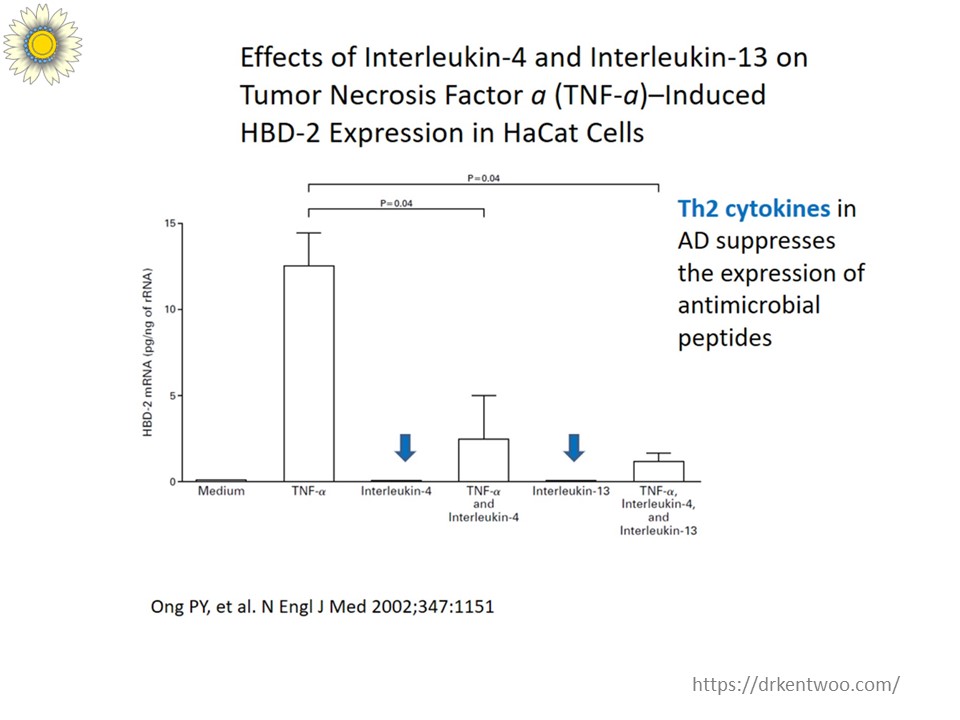
It has its own immune defense, including antimicrobial peptides that help keep bacteria under control.
I like to think of them as the skin’s built-in security system.
But eczema changes this environment.
Type 2 inflammation — particularly signals involving IL-4 and IL-13 — can interfere with some of the skin’s natural antimicrobial defenses.
So poorly controlled eczema can mean:
- More inflammation
- A weaker barrier
- Less effective natural defense
- More opportunity for bacteria to cause problems
This is one reason why controlling the eczema itself matters.
Does Every Oozing Flare Need Antibiotics?
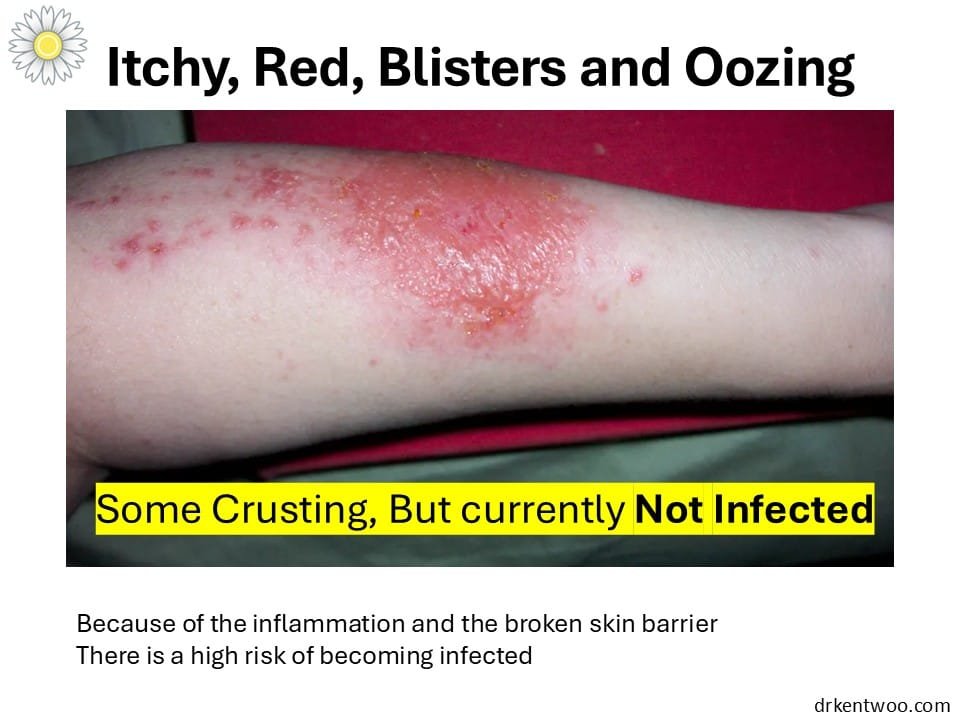
Not necessarily.
This is another area where things can become confusing.
Eczema itself can cause redness, swelling, oozing and crusting.
So a red or weeping patch does not automatically mean:
“My child needs antibiotics.”
I become more concerned about infection when there is increasing pain, warmth, swelling, pus, rapidly worsening redness, significant crusting, or fever.
If you’re unsure, have it assessed rather than automatically reaching for antibiotics.
What About the Medicated Creams?
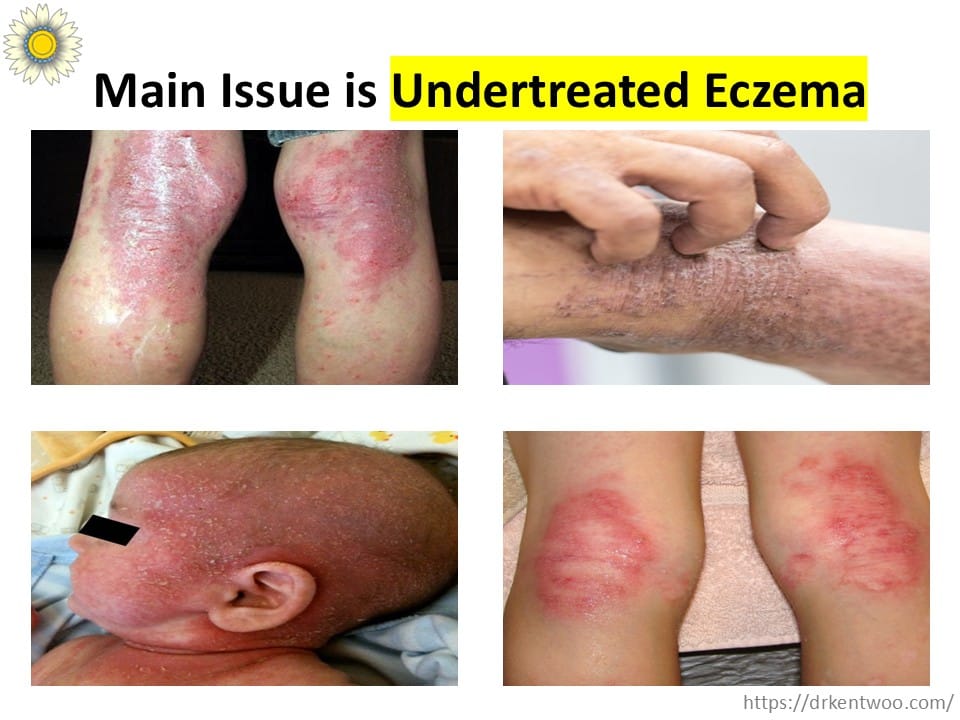
This is probably one of the most important things I want parents to understand.
I often hear:
“Doctor, I’m afraid the steroid cream will suppress the immune system and cause infection.”
I understand the concern.
But there is another way to look at it.
Active eczema itself is damaging the skin.
It increases inflammation.
It increases itch.
It leads to scratching.
And scratching damages the skin barrier.
Topical anti-inflammatory treatments when used correctly:
- Calms the inflammation
- Reduces itch
- Helps antimicrobial peptide production
- Restores the skin barrier
So What Can We Do?
There are three things I think about:
1. Control the inflammation
The better the eczema is controlled, the healthier the skin environment can become.
2. Protect the skin barrier
Regular moisturization helps reduce dryness and support the barrier.
It isn’t glamorous.
But it is one of the foundations of eczema care.
3. Support a healthy skin microbiome
This is also why I developed NatureDr8.
It is designed for eczema-prone skin, with moisturizing ingredients to support the skin barrier and a Prebiotic Lipidic Complex formulated to help maintain a balanced skin microbiome.
The philosophy is simple:
Support the skin before it gets into trouble.
[Click here: To Learn How NatureDr8 helps Eczema Skin]
What If the Infections Keep Coming Back?
This is where I would take a step back.
If a child keeps developing “infected eczema”, I don’t just want to treat each infection as it appears.
I want to ask:
Why is the eczema not adequately controlled?
Sometimes treatment is inconsistent because parents are understandably worried about the medications.
Sometimes there are allergic or environmental factors contributing to the eczema.
And sometimes we need to consider more advanced treatments.
Because treating the infection is only one part of the story.
We also need to treat the eczema that created the opportunity for the infection in the first place.
The Bottom Line
Eczema skin is prone to Staph colonization and infections.
That does not mean every flare is an infection.
And it certainly does not mean your home is dirty.
The bigger picture is the relationship between inflammation, the skin barrier and the skin microbiome.
So good eczema care is not simply about chasing infections.
It is about getting the underlying eczema under control.
Calm the inflammation.
Protect the barrier.
Support the microbiome.
And give the skin the best chance to protect itself.
If you or your loved one is suffering from severe eczema:
Contact Allergy Immunology Clinic
We can provide proper evaluation and a treatment plan