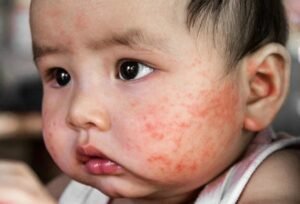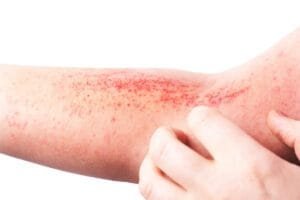
Essential Guide to Managing Atopic Dermatitis: Protecting Your Skin Barrier

If you or your child have atopic dermatitis / eczema, you probably already know the cycle.
The skin becomes dry.
Then it starts to itch.
You scratch.
The skin becomes inflamed and cracked.
And before you know it, another flare has started.
So what can you actually do about it?
The answer is not simply “put on more moisturizer.”
Good eczema care is about controlling inflammation, protecting the skin barrier, reducing unnecessary irritation, and knowing when medical treatment is needed.
Let’s start with the basics.
Download the Eczema Basic Care Guide →
What Is Atopic Dermatitis?

Atopic dermatitis is a chronic inflammatory skin condition.
It causes:
- Dry, itchy skin
- Redness and inflammation
- Cracking and skin damage
- Increased sensitivity to irritants
- An increased tendency for skin infections
And there is something important to understand.
Eczema skin is not simply “dry skin.”
The skin barrier is disturbed, while underlying inflammation makes the skin more sensitive and prone to itching.
That combination is what creates the familiar itch–scratch cycle.
The Itch–Scratch Cycle
This is where many patients get trapped.
Inflammation → itch → scratching → barrier damage → more inflammation.
The more you scratch, the more you damage the skin.
And once the barrier is damaged, irritants and bacteria have an easier time getting through.
This is why controlling eczema early matters.
It is not just about making the rash look better.
We want to break the cycle.
So What Should You Do Every Day?
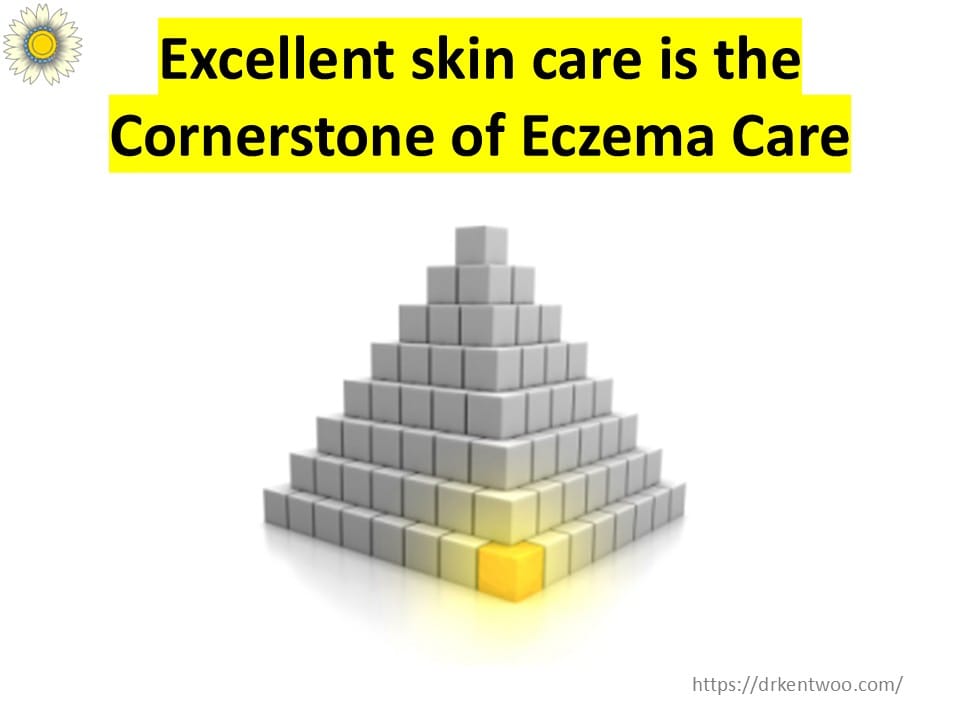
1. Moisturize Regularly
Moisturizer is not a luxury in eczema.
It is part of treatment.
Regular moisturization helps reduce water loss and supports the skin barrier.
Choose a moisturizer that your skin tolerates well and use it consistently — particularly after bathing.
Consistency matters more than finding the “perfect” product.
If you are looking for a moisturizer specifically designed for eczema-prone skin, I developed NatureDr8 with this principle in mind.
It is formulated to moisturize and support the skin barrier, with a Prebiotic Lipidic Complex designed to help maintain a balanced skin microbiome.
2. Be Careful With What Touches Your Skin
Eczema skin is easily irritated.
Common culprits include:
- Fragranced soaps and skincare
- Strong detergents
- Perfumes
- Harsh cleansers
- Excessive washing
- Heat and sweating
You don’t need to create a completely sterile environment.
In fact, you can’t.
The goal is simply to reduce unnecessary irritation.
3. Don’t Be Afraid of Your Medicated Creams
This is one of the most common concerns I hear from parents.
“Doctor, I’m worried the steroid cream will make the skin thin.”
Or:
“I’m afraid it will suppress the immune system and cause infection.”
I understand the concern.
But untreated eczema has consequences too.
Active inflammation increases itching and damages the skin barrier. Poorly controlled eczema can therefore make the skin more vulnerable to infection.
When prescribed appropriately and used correctly, topical anti-inflammatory treatments are an important part of eczema management.
The goal is not to use more medication.
The goal is to use the right treatment, at the right time, for the right duration.
If you are unsure how to use your child’s medication, ask.
Don’t stop treatment simply because you are afraid of it.
What About Food Allergies?
This is where things can get complicated.
Many parents notice that their child’s eczema seems to worsen after certain foods.
Sometimes food allergy is relevant.
But not every eczema flare is caused by food.
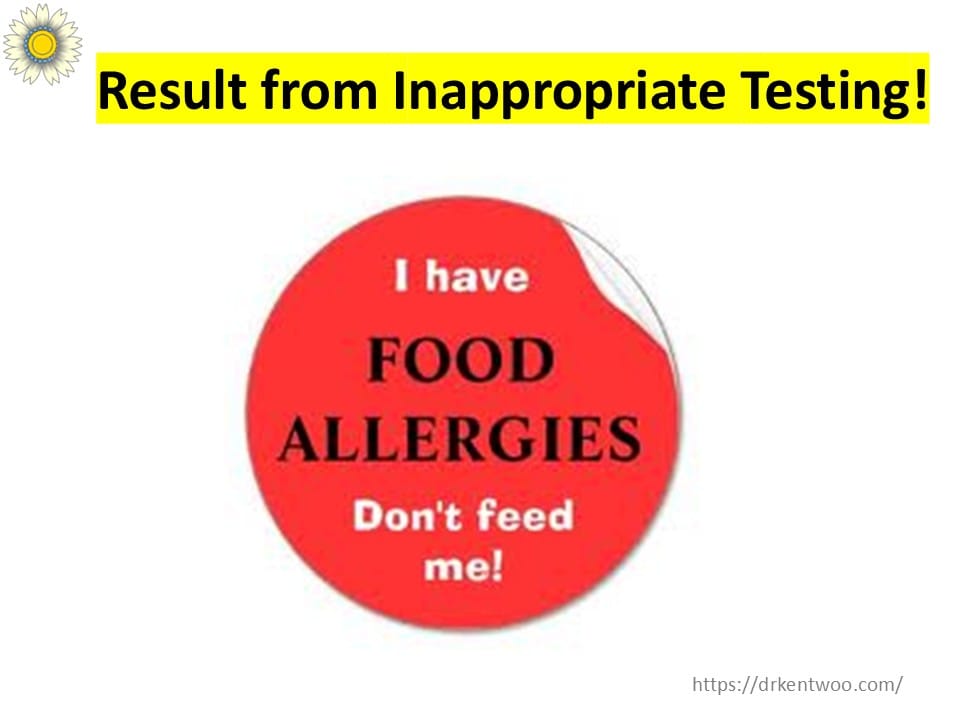
And broad food elimination without proper assessment can create nutritional problems — particularly in young children.
This is why I don’t recommend randomly removing multiple foods or ordering large panels of allergy tests simply because someone has eczema.
Test when there is a clinical reason to test.
If a food allergy is suspected, an Allergy & Immunology assessment can help determine whether further testing is appropriate.
Learn more about Skin Prick Testing →
What About Infections?
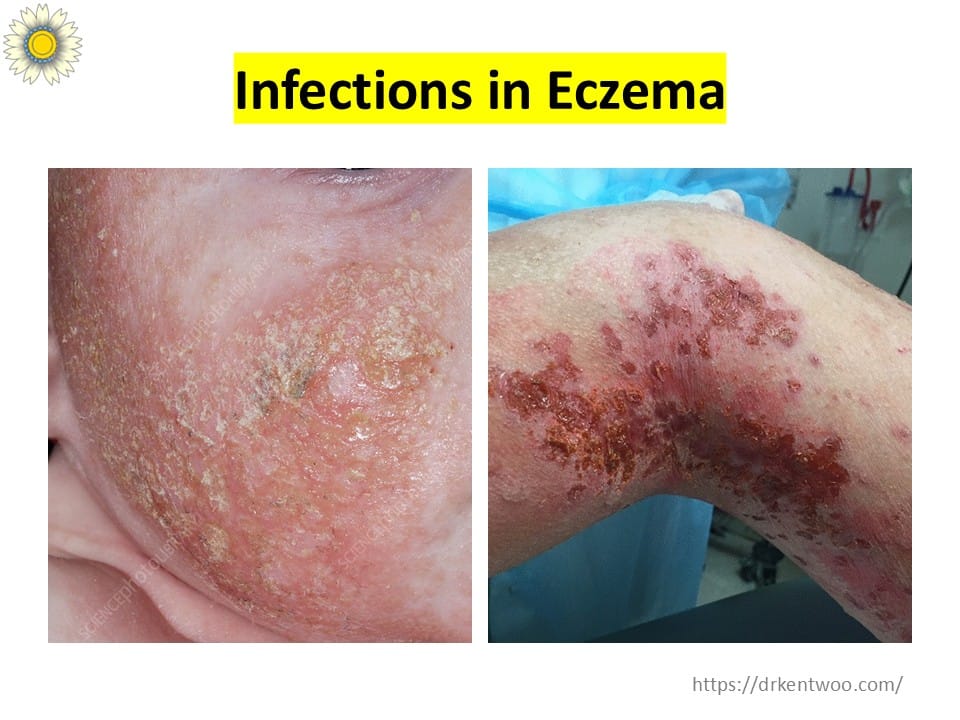
Eczema skin is more prone to colonization with bacteria such as Staphylococcus aureus.
But colonization does not automatically mean infection.
When the skin barrier is damaged and inflammation is poorly controlled, bacteria have more opportunity to cause problems.
Look out for:
- Increasing pain or warmth
- Pus or significant discharge
- Rapidly worsening redness
- Increasing swelling
- Extensive crusting
- Fever or a child who is becoming unwell
If you are unsure whether a flare is infected, have it assessed.
Not every red or weeping eczema flare needs antibiotics.
Sometimes what needs treating is the eczema itself.
Why Eczema Skin Gets Infected →
When Moisturizers Aren’t Enough
Sometimes good skincare simply isn’t enough.
Depending on the severity of your eczema, treatment may include:
- Topical steroids
- Non-steroidal topical treatments
- Phototherapy
- Oral systemic treatments
- Biologic treatments such as dupilumab or other newer therapies
The right treatment depends on the severity of the eczema, your age, other medical conditions, previous treatments, and how the disease is affecting your life.
There is no single treatment that is best for everyone.
What About Allergies?

Having atopic dermatitis can be part of what we call the atopic march.
Some children with eczema later develop food allergy, allergic rhinitis or asthma.
An important question is:
Is there evidence that an allergy is contributing to this particular patient’s symptoms?
That is where a careful history – together with allergy testing – can lead to a better treatment plan.
Learn more about the Atopic March →
When Should You See a Specialist?
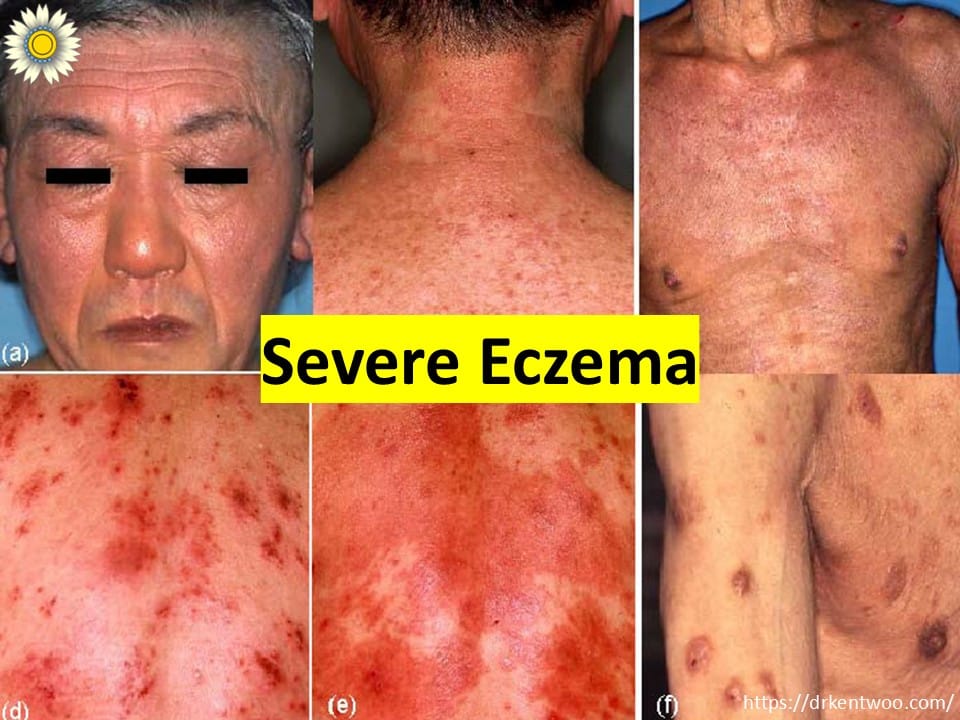
Consider an Allergy & Immunology assessment if:
- Eczema remains poorly controlled despite appropriate treatment
- Flares are frequent or severe
- There are recurrent suspected infections
- Food allergy is suspected
- The diagnosis is uncertain
- Conventional treatments are no longer enough
- Eczema is significantly affecting sleep, school, work or quality of life
Sometimes the most important step is not finding another cream.
It is stepping back and asking:
“Why is this eczema still not under control?”
That may lead us to a different diagnosis, an overlooked trigger, a problem with treatment, or the need for a more advanced treatment approach.
The Bottom Line
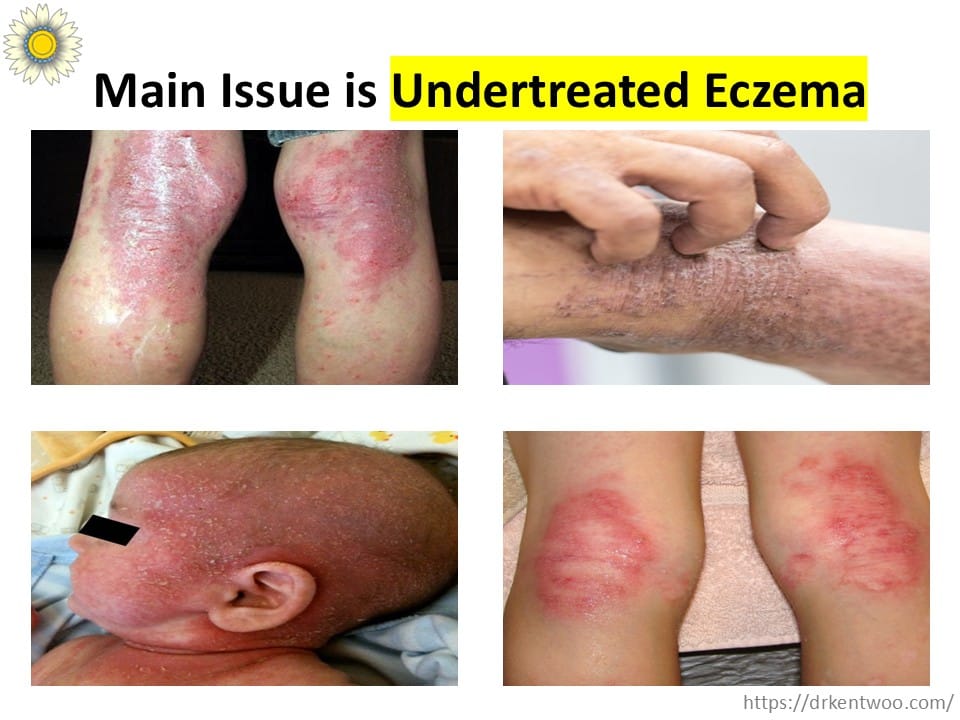
Good eczema care is not about chasing every flare.
It is about breaking the cycle.
Control the inflammation.
Protect the skin barrier.
Reduce unnecessary irritation.
Treat infections when they are actually present.
And when eczema remains difficult to control, don’t simply keep adding more creams.
Step back.
Look at the bigger picture.
Because the goal is not just to treat today’s rash.
It is to help your skin become healthier, more resilient, and easier to control over the long term.
Download the Eczema Basic Care Guide →
Contact the Allergy Immunology Clinic →