5 Telltale Signs of Allergic Rhinitis: Do You Have Them?
Do you wake up sneezing every morning?
Does your nose itch so much that you keep rubbing it?
Or perhaps your child always seems to have a blocked nose, even without a cold.
You may have allergic rhinitis, also known as hay fever.
It happens when your immune system reacts to allergens such as dust mites, pollen, pet dander or mold.
Most people recognize the usual symptoms: sneezing, runny nose, nasal congestion and itching.
But did you know that allergic rhinitis can also leave visible clues on your face?
Here are five signs I often look for when examining patients.
1️⃣ The Allergic Salute: Constant Nose Rubbing
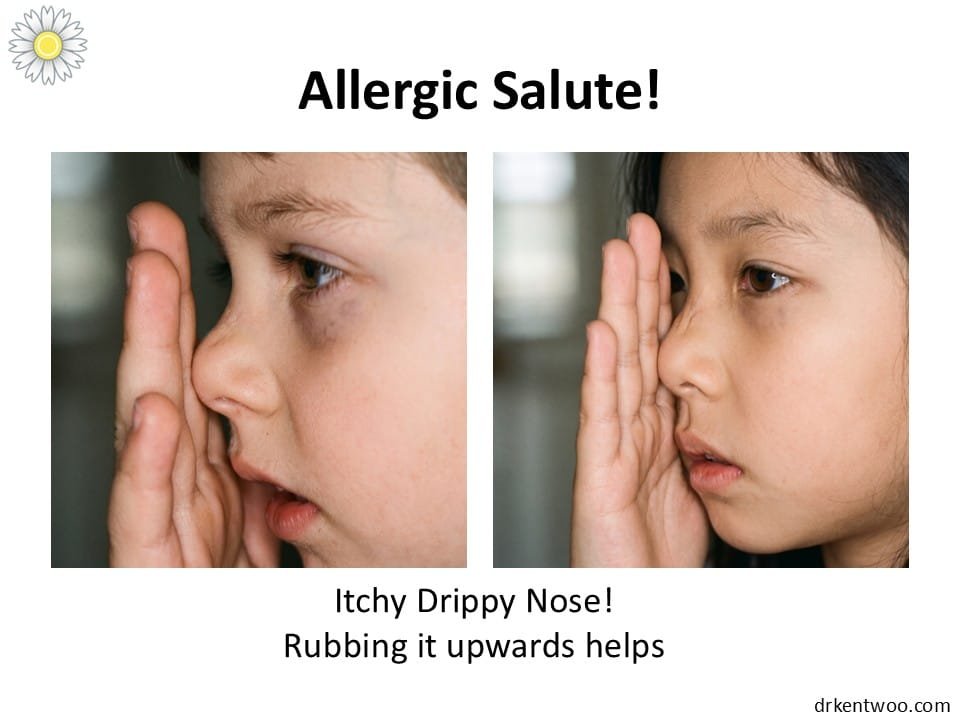
Have you noticed children repeatedly pushing their noses upwards with the palm of their hand?
We call this the allergic salute.
No, they are not giving you the middle finger!
They are simply trying to relieve an itchy nose.
When this happens frequently, it may suggest ongoing nasal irritation from allergic rhinitis.
And all that nose rubbing can eventually leave another clue.
2️⃣ Nasal Crease: The Line on the Nose
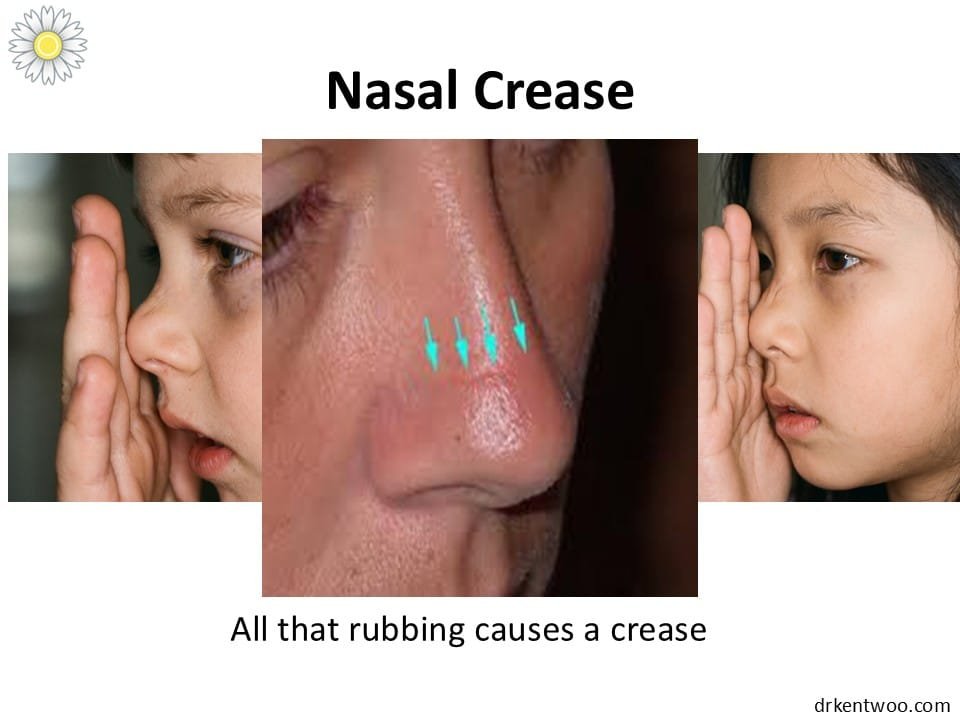
Look closely at the lower part of the nose.
Do you see a horizontal line running across it?
This is called a nasal crease.
It can develop from repeatedly rubbing or pushing the nose upwards.
I sometimes see this in children who have been rubbing their noses for years.
The crease itself is harmless, but it may be a clue to longstanding nasal itching.
3️⃣ Red, Itchy Eyes: Allergic Conjunctivitis
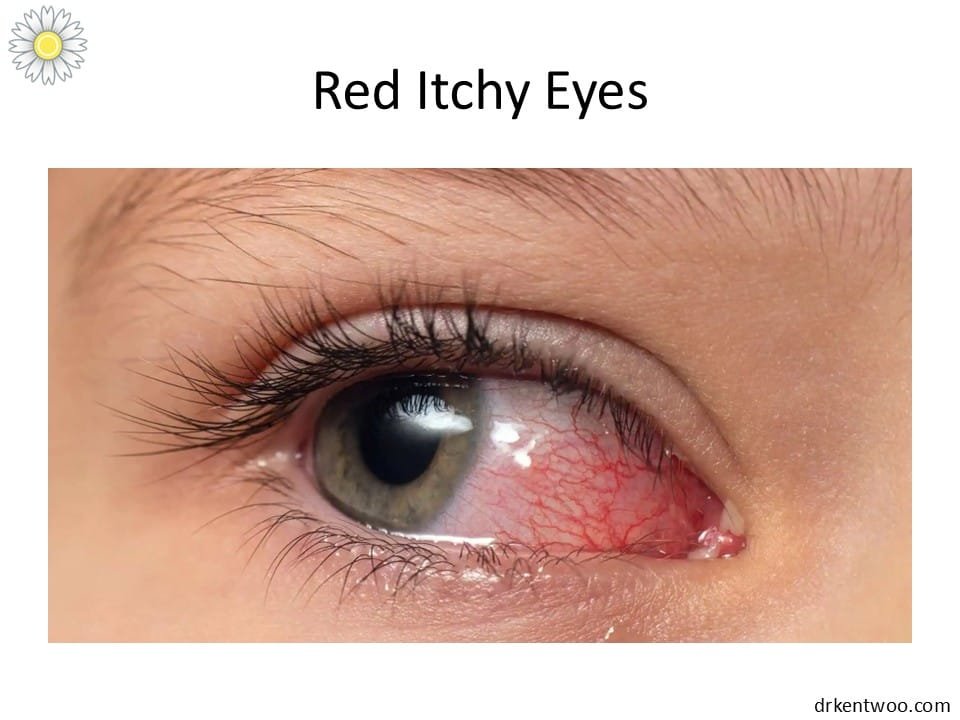
Allergic rhinitis does not always stop at the nose.
The eyes can become itchy, red and watery too.
This is called allergic conjunctivitis.
Some patients rub their eyes so frequently that the eyelids become swollen or irritated.
One useful clue is itching. Red eyes can have many causes, but itching in both eyes, especially with sneezing and nasal symptoms, makes allergy more likely.
The nose and eyes often react to the same airborne allergens.
4️⃣ Denny-Morgan Folds: Extra Lines Under the Eyes
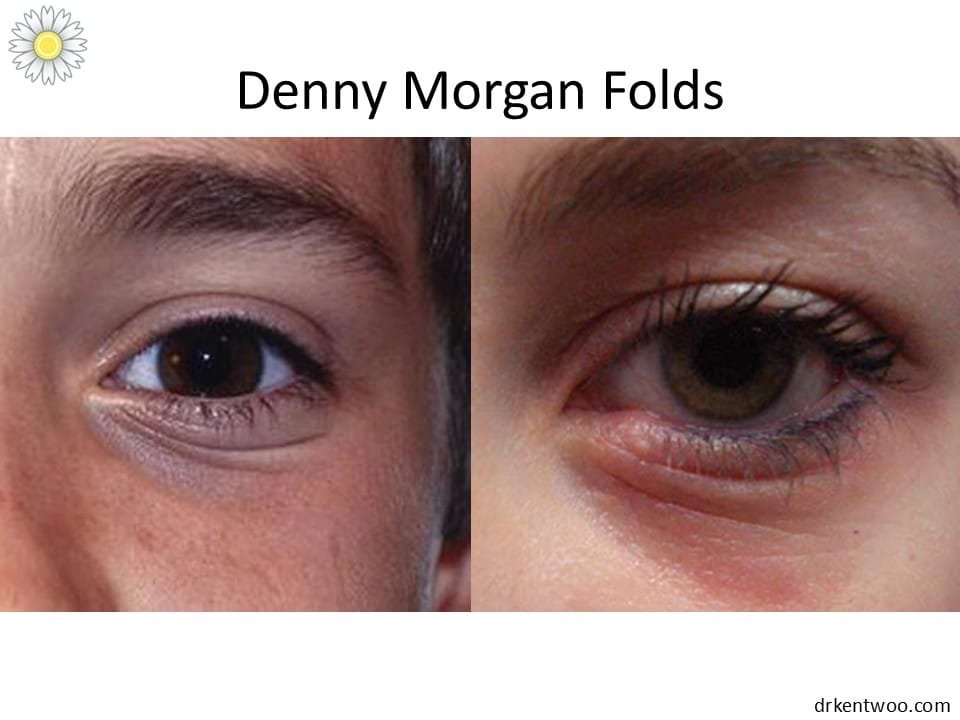
Have you noticed extra folds just below the lower eyelids?
These are called Denny–Morgan folds.
They are commonly seen in people with eczema and may also be present in those with allergic rhinitis.
Together with red, irritated eyes, these folds may give someone a tired appearance.
However, these folds are not exclusive to allergies.
Some people have them naturally. K-Beauty, anyone?
So I consider them a clue, rather than proof of an allergic condition.
5️⃣ Dark Eye Circles: The “Allergic Shiner” Look
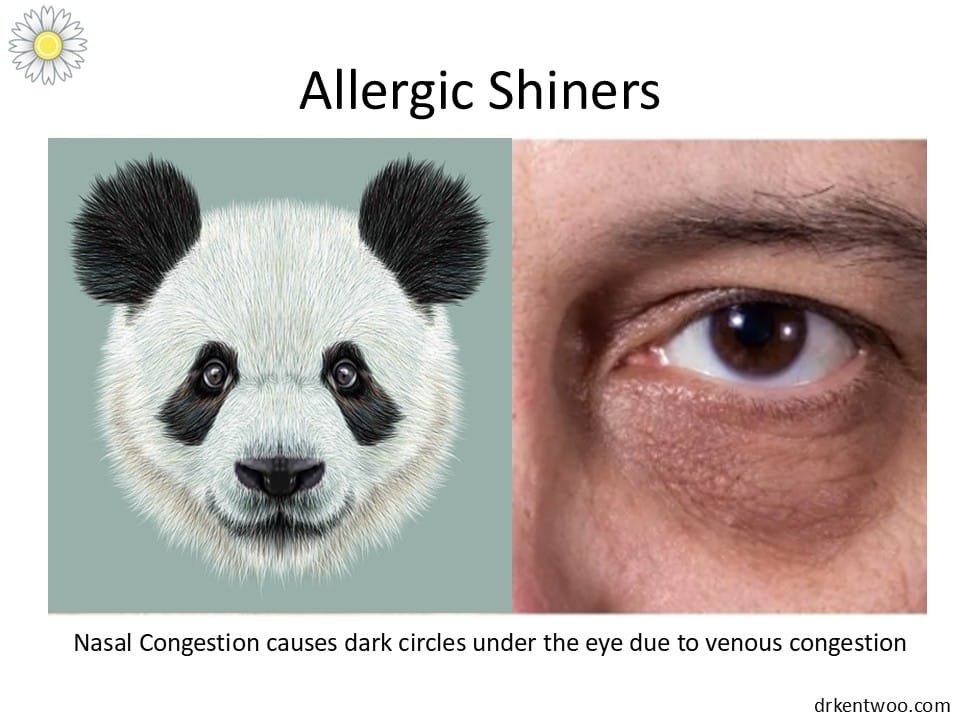
Does your child have dark circles under the eyes, even after a good night’s sleep?
We call these allergic shiners. Some people call them panda eyes.
Persistent nasal congestion can affect blood flow around the eyes, contributing to the darker appearance beneath the lower eyelids.
Of course, not every dark circle is caused by allergy.
Genetics, skin pigmentation and other factors can also contribute.
But when dark circles appear together with frequent sneezing, an itchy nose and nasal congestion, allergic rhinitis is worth considering.
Information You Can Use
Recognizing these signs is useful, but you do not need to have all five to have allergic rhinitis.
And having one of these signs does not automatically mean you have an allergy.
What matters is the overall pattern of symptoms.
If you suspect allergic rhinitis:
- Look for triggers. Dust mites, pets, pollen and mold are common examples.
- Consider allergy testing. A skin prick test may help identify relevant allergens when interpreted alongside your symptoms.
- Control the symptoms. Antihistamines, nasal sprays and appropriate allergen avoidance can help.
- Ask about long-term treatment. Allergen immunotherapy (AIT) may be an option for selected patients. Unlike medications that primarily control symptoms, immunotherapy aims to modify the allergic response.
Want to know what you may be allergic to?
📌Find out about allergy blood testing at our clinic.
Final Thoughts
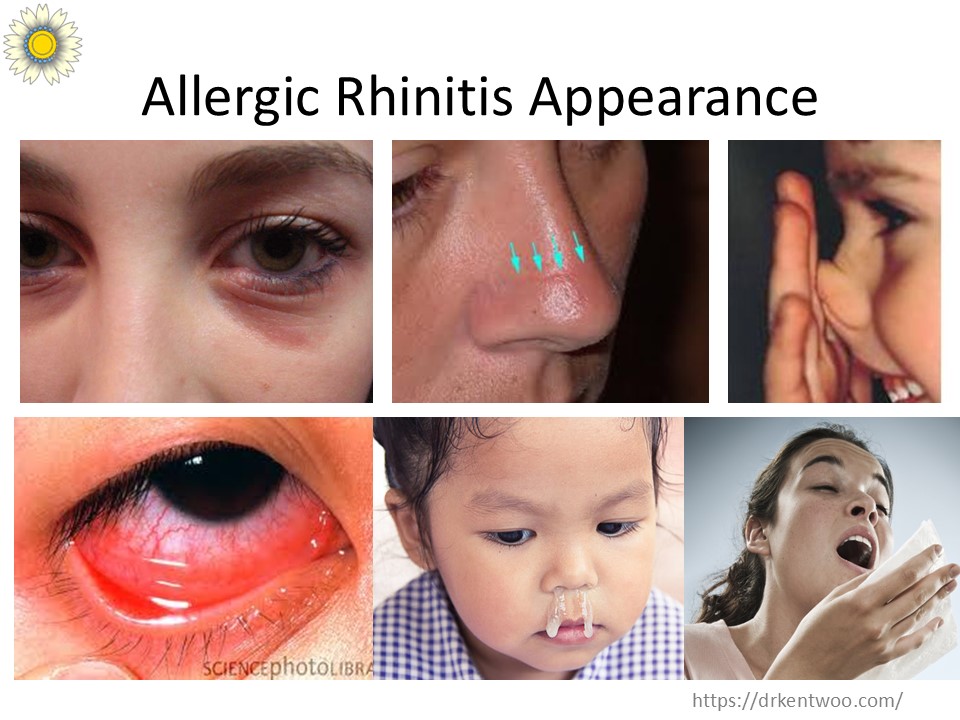
Allergic rhinitis is more than just sneezing.
Sometimes the clues are right there on your face.
But the diagnosis is not made by looking at a nose crease or dark circles alone.
Your symptoms, medical history and examination are just as important.
If you or your child has persistent sneezing, an itchy nose or nasal congestion, the Allergy Immunology Clinic Team can help assess the cause and discuss appropriate treatment.
Know someone who is always sneezing or rubbing their nose? Share this article with them.