Bird Feather Allergies🪶
Most people think feather allergy means:
👉 owning a pet bird
But sometimes…
the real culprit is the pillow you sleep on every night.
What Actually Causes Feather Allergy?

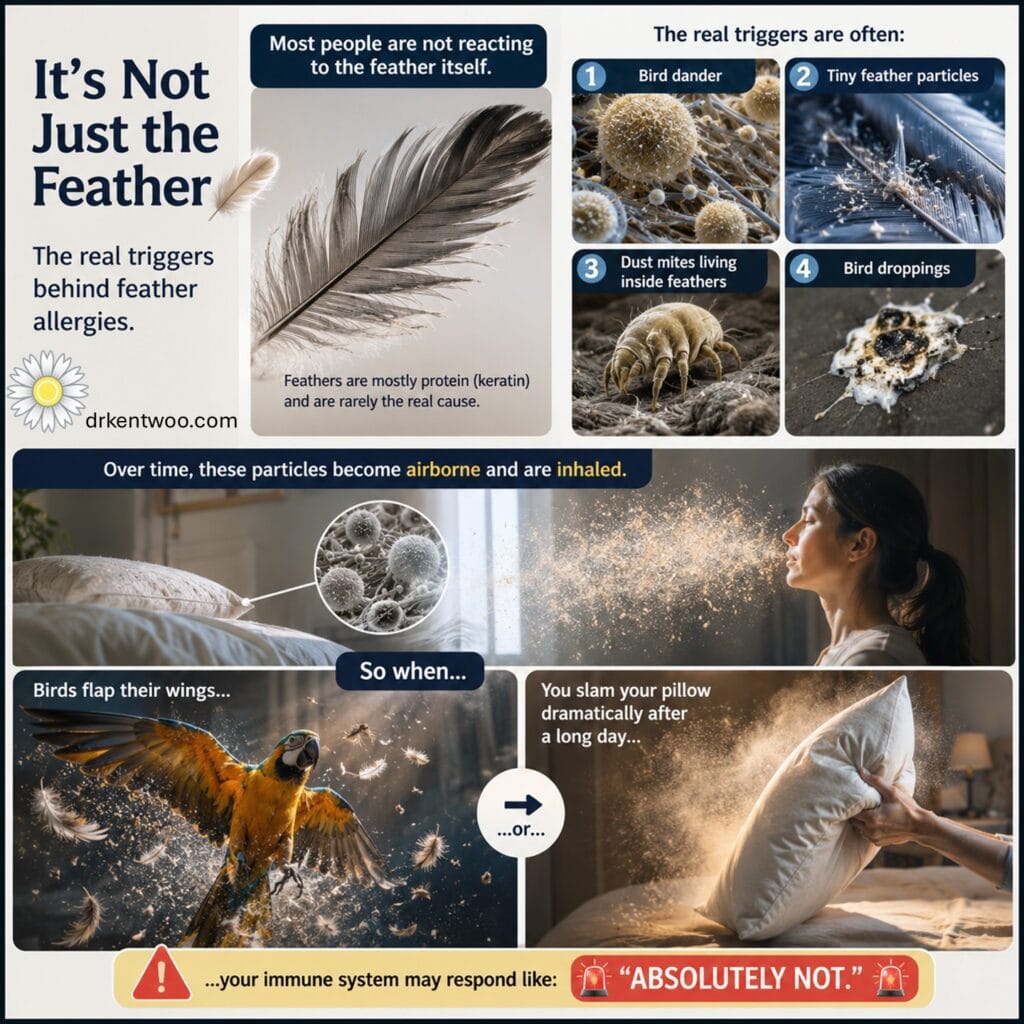
Interestingly, many people are not reacting to the feather itself.
The real triggers are often:
- bird dander
- tiny feather particles
- dust mites living inside feathers
- bird droppings
Over time, these particles become airborne and are inhaled.
So when birds flap their wings…
or when you slam your pillow dramatically after a long day…
your immune system may respond like:
🚨 “Absolutely not.” 🚨
Common Symptoms of Feather Allergy
Symptoms are usually similar to hay fever:
- Sneezing
- Blocked or runny nose
- Itchy or watery eyes
- Postnasal drip
- Cough
Some patients also develop:
👉 dark circles under the eyes
(commonly called allergic shiners)
And in sensitive individuals, feather exposure may also worsen asthma symptoms.
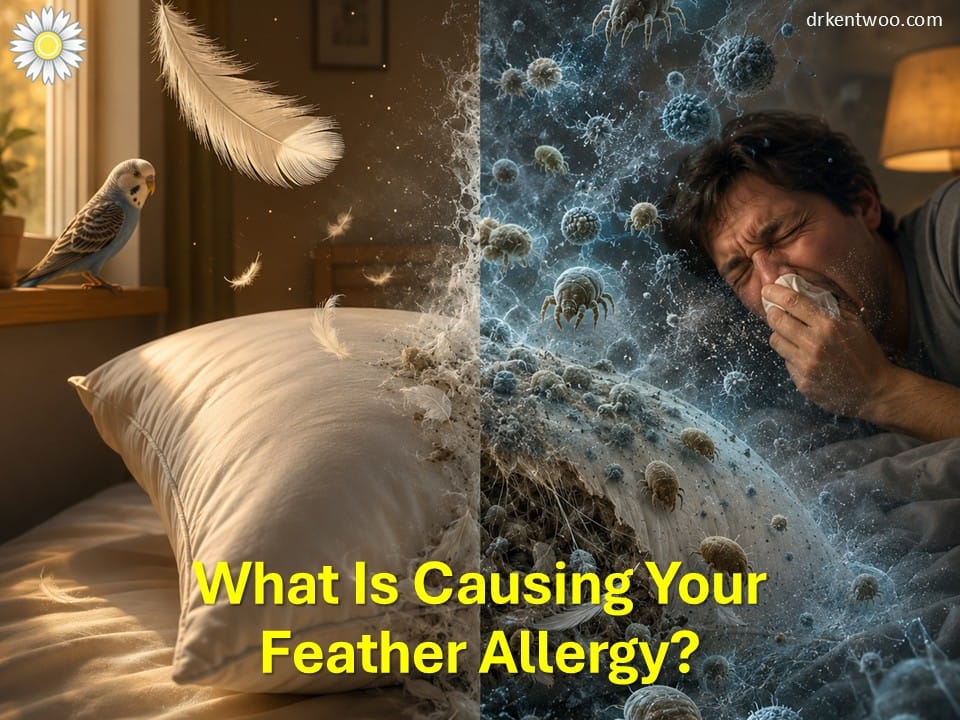
When Your Pillow Is Secretly Attacking You
This is where things get interesting.
Sometimes the issue is not your environment during the day.
It’s your pillow at night.
Down and feather pillows can trap:
- dust mites
- feather particles
- bird proteins
Which means your face spends 6–8 hours inhaling allergens while you sleep.
Not ideal.
Down Allergy Symptoms:
👉 Morning sneezing
👉 Waking up congested
👉 Itchy eyes after sleep
👉 Night-time cough
👉 Symptoms worse in the bedroom
👉 Symptoms improving when sleeping elsewhere
One clue allergists often look for?
Patients who say:
“Doctor, my nose becomes much better when I stay in hotels.”
Meanwhile the pillow at home is sitting there quietly like:😜
Hidden Sources of Feather Allergens
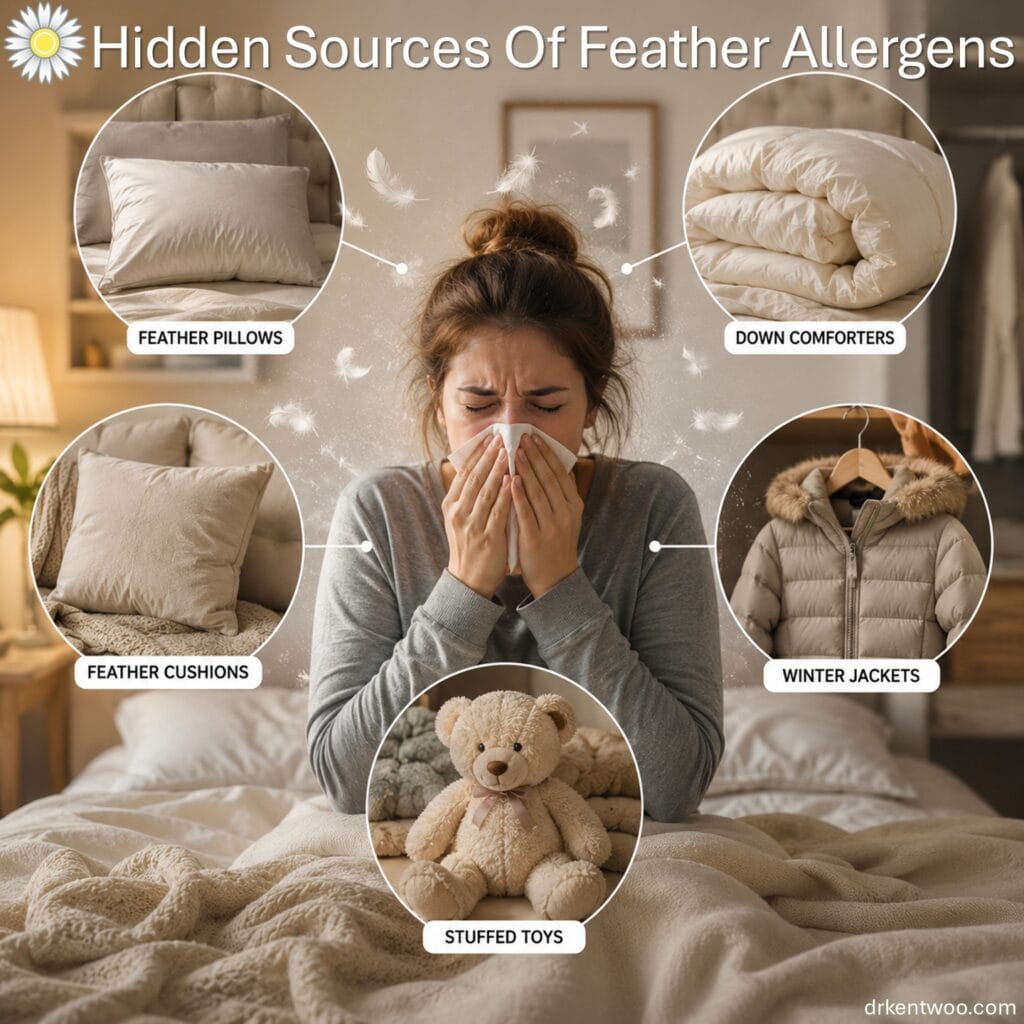
You do not need to own a bird to react to feather allergens.
Common hidden sources include:
- feather pillows
- down comforters
- feather cushions
- winter jackets
- stuffed toys
Sometimes patients remove birds from the home…
but continue sleeping directly on the allergen every night.
How to Reduce Feather Allergens at Home
A few practical changes can help significantly:
✅ Switch feather pillows to synthetic alternatives
✅ Keep bird cages out of the bedroom
✅ Use a HEPA filter vacuum
✅ Reduce dust accumulation
✅ Wash hands after handling birds
✅ Delegate cage cleaning if possible
For some patients, reducing feather exposure alone can significantly improve allergy and asthma symptoms.
Final Thoughts
Bird feather allergies are more common than many people realize.
Sometimes the trigger is obvious.
Sometimes it hides quietly inside:
- pillows
- bedding
- cushions
- or the “cute little bird” silently judging you from across the room.
The good news?
Once identified, symptoms often improve dramatically with proper allergen reduction.
Because sometimes…
The problem is not your sinus.
It’s your pillow plotting against you. 🪶