
Swimming with Asthma: Expert Tips to Stay Safe & Enjoy the Water
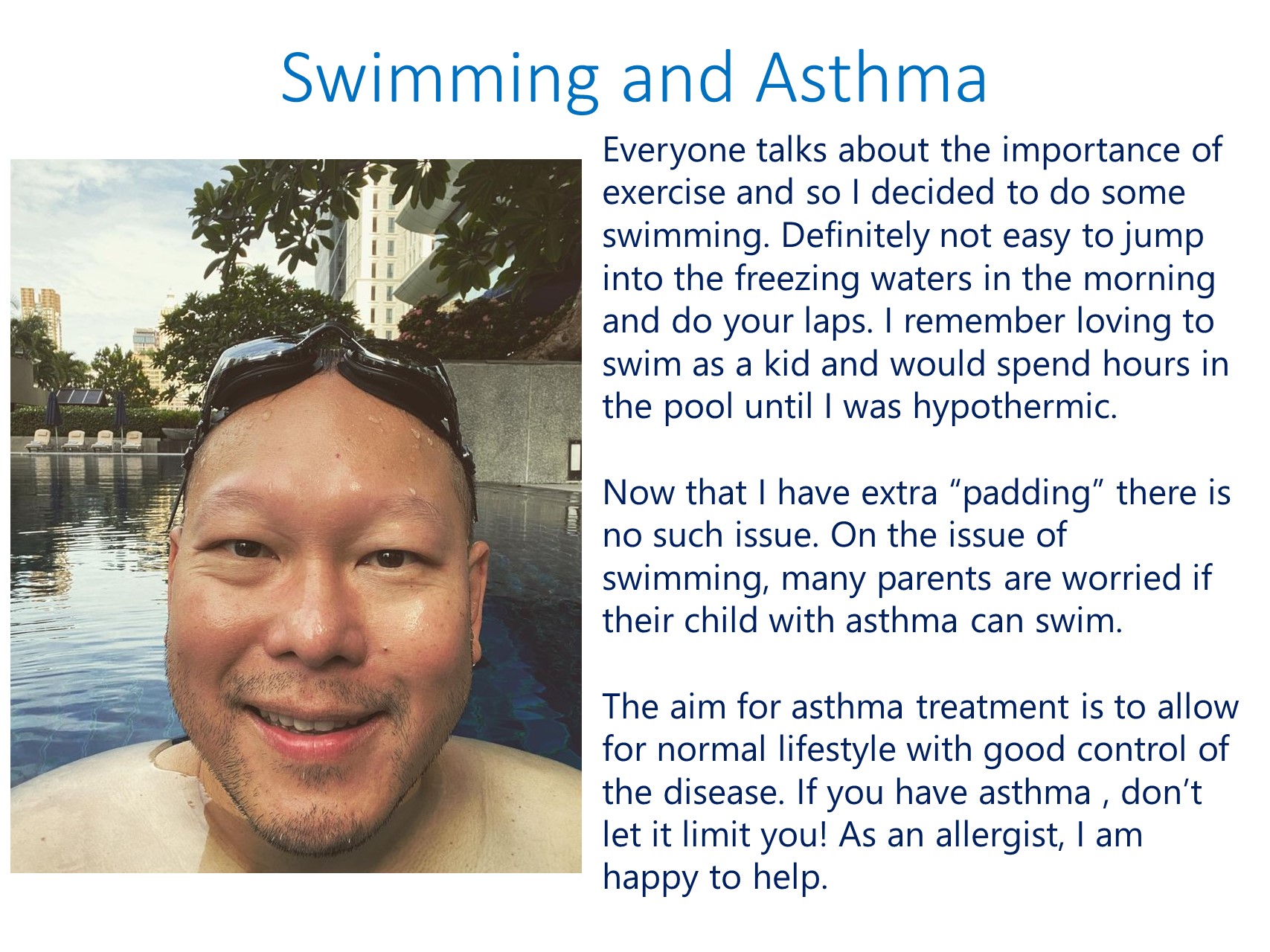
You feel great on land.
Then you get into the pool, start swimming, and a few laps later…
Your chest feels tight.
You start coughing.
You can’t seem to catch your breath.
If this sounds familiar, you may have wondered:
“Is swimming actually bad for my asthma?”
Not necessarily.
In fact, swimming can be an excellent form of exercise for people with asthma. The problem is that certain conditions around swimming can make the airways more sensitive.
The key is understanding what triggers your symptoms — and knowing how to manage them.
Why Can Swimming Trigger Asthma?
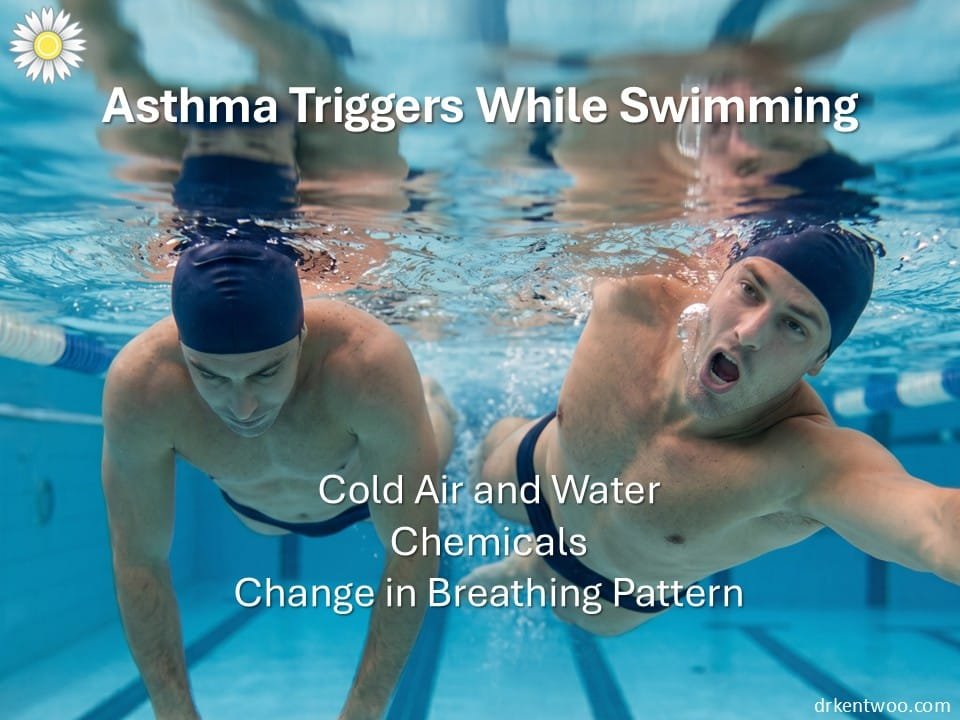
Cold air or water
Sudden cooling of the airways can cause them to narrow.
This is more likely to be a problem if you are already prone to exercise-induced bronchoconstriction.
That strong “chlorine” smell
That familiar “strong chlorine smell” isn’t actually the chlorine itself.
It is largely produced by chloramines, which can accumulate when pool water is poorly ventilated or inadequately maintained.
These chemicals can irritate the airways, particularly in indoor pools.
If you notice that one particular pool consistently makes you cough or wheeze, the environment may be part of the problem.
The way you breathe
Swimming requires a very different breathing pattern from walking or running.
You repeatedly hold your breath underwater, then take deeper breaths when you turn to breathe.
For some people with asthma, this change in breathing can contribute to airway narrowing.
So if you regularly find yourself coughing or becoming tight-chested after several laps, don’t simply assume that you are “unfit.”
Your asthma may not be adequately controlled.
Before You Get Into the Pool
Warm up first
Don’t go from sitting at the side of the pool straight into hard laps.
Start gently and gradually increase your pace.
A proper warm-up can reduce the likelihood of exercise-induced bronchoconstriction in some people.
Know your asthma plan
If your doctor has prescribed a reliever inhaler for exercise-related symptoms, use it as directed.
More importantly, if you regularly need your reliever before swimming, it is worth reviewing whether your asthma is adequately controlled.
Choose your pool wisely
If pool chemicals seem to trigger your symptoms, a well-maintained and well-ventilated pool may be more comfortable than a poorly ventilated indoor pool with strong chemical fumes.
While Swimming: Don’t Try to “Push Through”
This is where I see people make a common mistake.
They develop chest tightness or coughing…
…and keep swimming because they think:
“I just need to get fitter.”
Don’t.
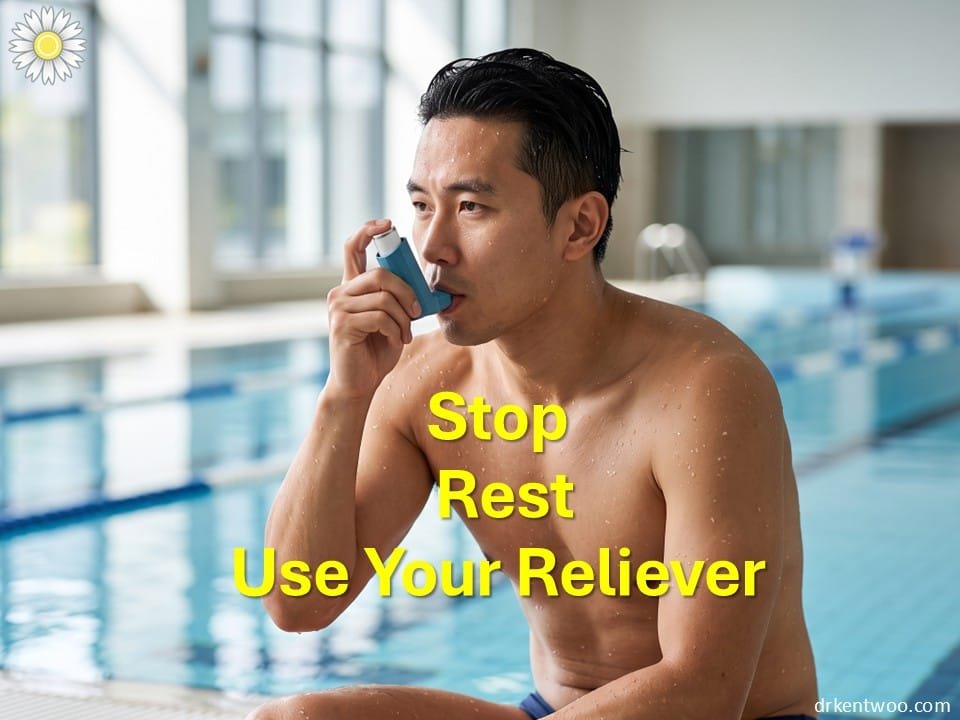
Slow down or stop. If necessary, get out of the pool and follow your asthma action plan.
Normal exercise breathing is expected. Wheezing, chest tightness and persistent coughing are not.
If symptoms are severe, rapidly worsening, or don’t improve with your reliever medication, seek urgent medical attention.
Before Your Next Swim, Remember
✅ Make sure your asthma is well controlled
✅ Follow your prescribed asthma action plan
✅ Warm up before vigorous swimming
✅ Pay attention to pool ventilation and chemical exposure
✅ Start gradually rather than going straight into hard laps
✅ Stop if you develop asthma symptoms
✅ Don’t repeatedly “push through” coughing or chest tightness
✅ Discuss recurring swimming-related symptoms with your doctor
Asthma doesn’t mean you have to give up swimming.
The goal isn’t to swim less.
It’s to make sure your lungs can keep up with the rest of you.
Contact Allergy Immunology Clinic if you need help with your asthma