Topical Steroid Withdrawal: What You Need to Know

“Doctor, I think I am having steroid addiction.”
I hear this from eczema patients more often than you might think.
Sometimes the fear comes from a well-meaning friend.
Sometimes it comes from social media.
And sometimes, patients have read about something called Topical Steroid Withdrawal (TSW).
They worry that using steroid cream will make their eczema worse—or that their skin will become “addicted” to it.
So let’s talk about it.
Because there are two things I don’t want to do:
Dismiss the fear.
And create more fear.
Yes, Topical Steroid Withdrawal Exists
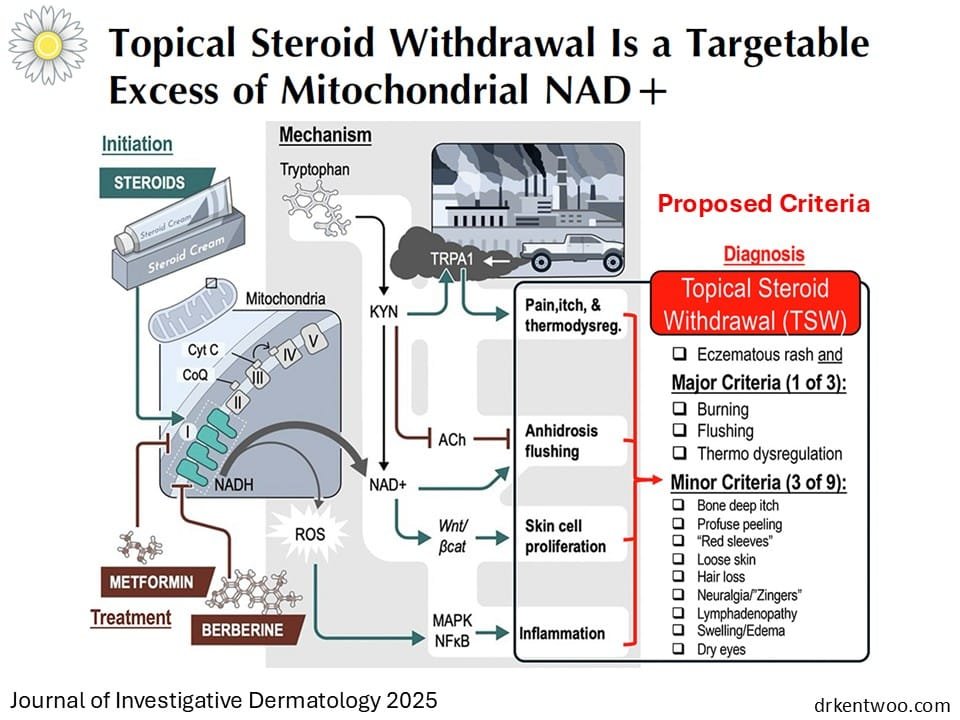
TSW is a real and sometimes very distressing clinical phenomenon that has been described in people who have used topical corticosteroids, particularly with prolonged or frequent use.
I’ve seen patients with symptoms that are concerning for TSW.
And I understand why these patients can feel frustrated when they believe their concerns have not been taken seriously.
I’m going to get lots of hate.
But here’s what you won’t hear enough about on social media:
📌 It doesn’t happen to everyone.
📌 The true frequency is still uncertain, but it is probably less common than social media makes it seem.
📌 It has most often been reported after prolonged or frequent use of moderate- to high-potency steroids, particularly on sensitive areas such as the face.
But there is an important point:
Not every eczema flare after stopping a steroid is TSW.
Eczema itself can flare when effective anti-inflammatory treatment is stopped.
Other skin conditions can also produce similar symptoms.
This is why diagnosis matters.
What Is Topical Steroid Withdrawal?
The terminology can be confusing.
You may see terms such as:
- Topical Steroid Withdrawal Syndrome
- Topical Steroid Withdrawal
- Red Skin Syndrome
- Red Burning Skin Syndrome
- Topical Steroid Addiction
I prefer to call it: Topical Steroid-Induced Red Skin Syndrome.
These terms are sometimes used interchangeably, although they do not necessarily describe exactly the same thing.
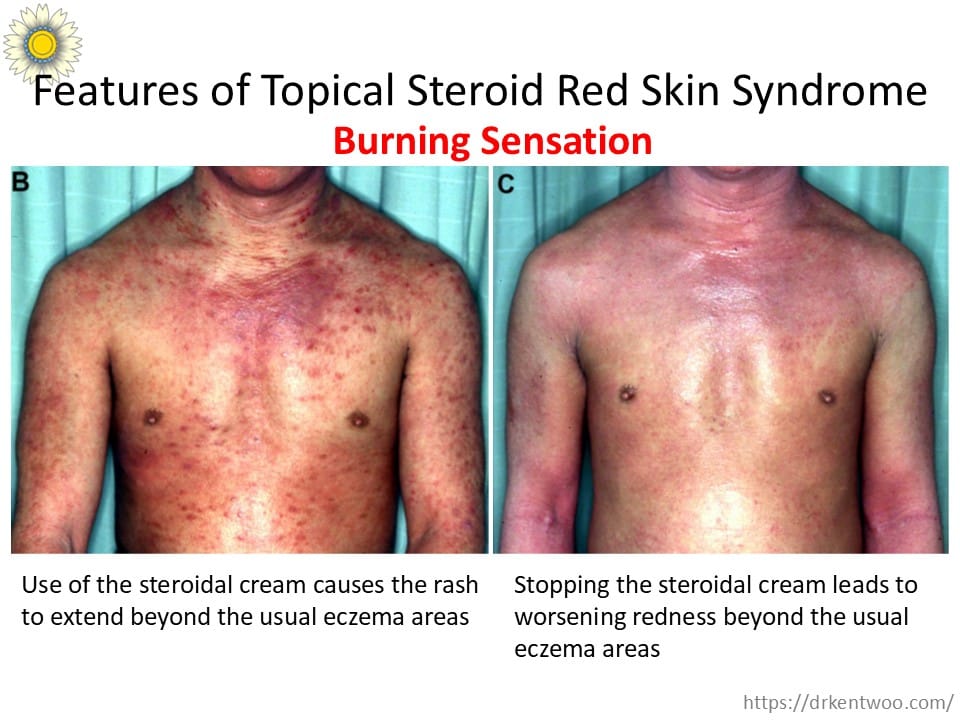
TSW generally refers to a pattern of symptoms that develops after reducing or stopping topical corticosteroids following prolonged or frequent use.
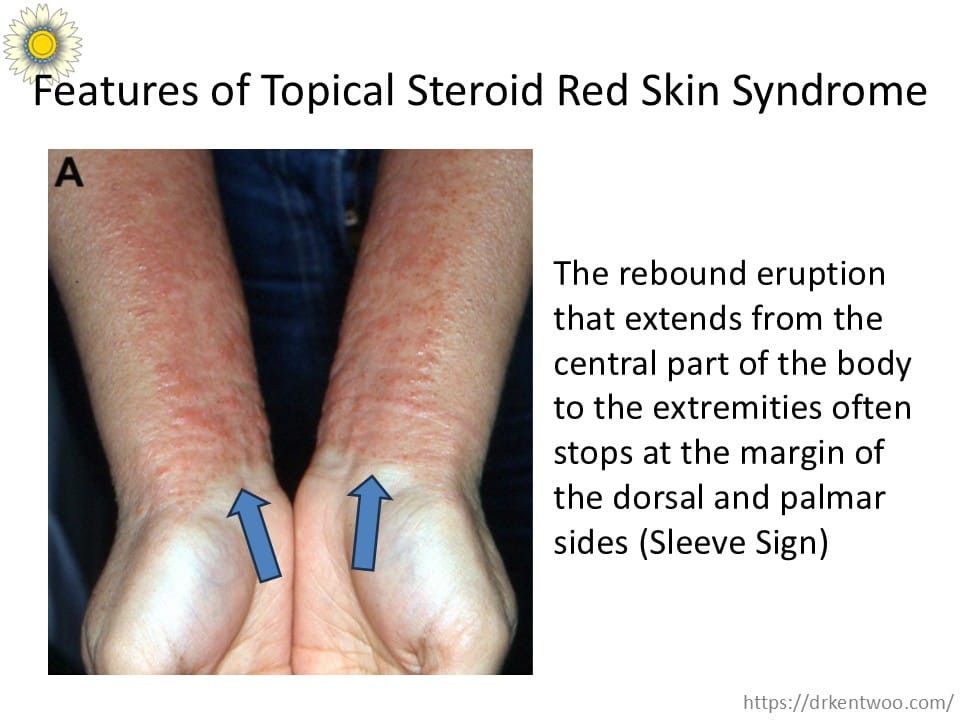
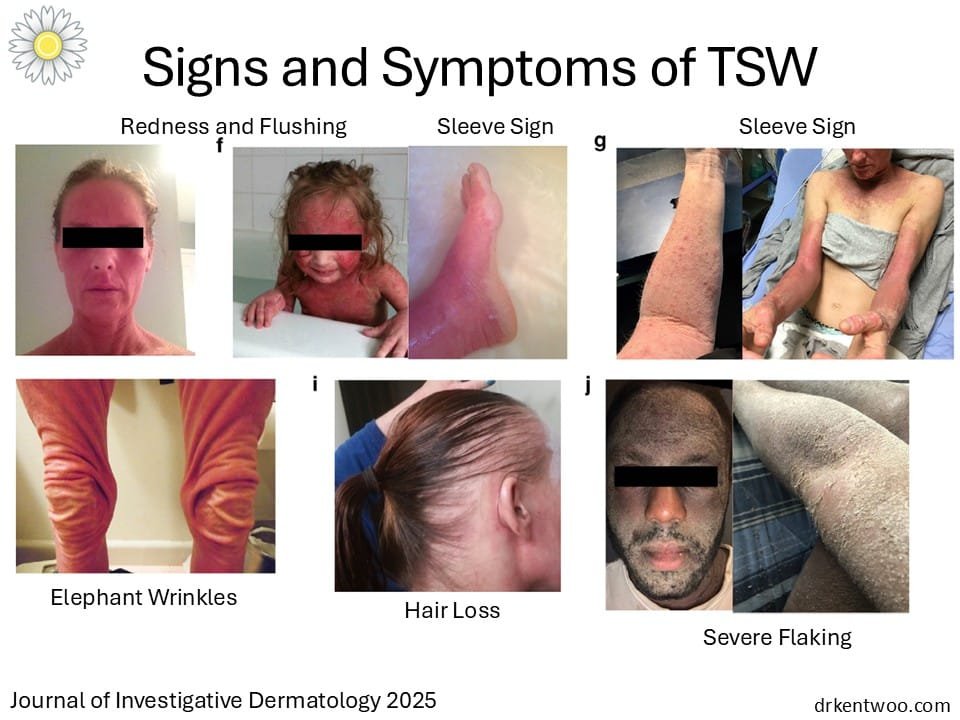
The skin may become:
🔥 Red and intensely burning
🌡️ Hot or unusually sensitive
🌊 Oozing or weeping
📈 Much more inflamed than expected
Sometimes the redness extends beyond the areas where the steroid was originally being applied.
This can be extremely uncomfortable.
And understandably, frightening.
Why Is It So Difficult to Recognize?
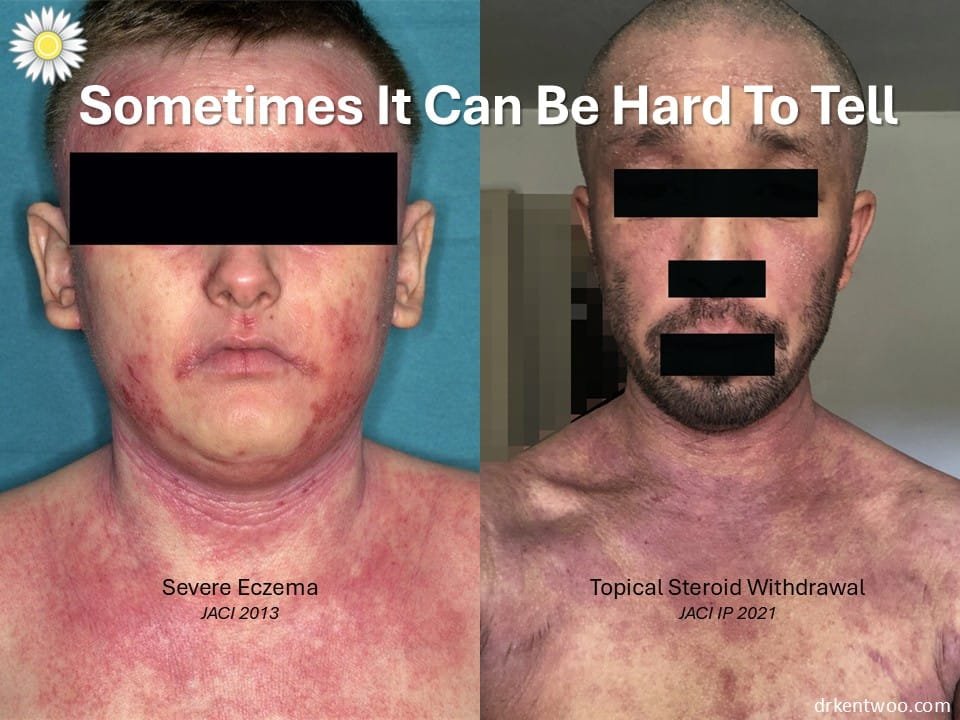
Here’s the problem.
TSW can look very similar to severe eczema.
A patient may stop their steroid.
The eczema flares dramatically.
They think:
“See? The steroid has damaged my skin.”
But another possibility is that the underlying eczema is simply no longer being controlled.
So the more useful question is:
- What is actually happening to the skin?
- Is this uncontrolled eczema?
- Is there an infection?
- Is there contact dermatitis?
- Is the treatment being used incorrectly?
- Or could the clinical picture be consistent with TSW?
Sometimes, the answer isn’t immediately obvious.
This is why the skin needs to be properly assessed.
I don’t believe in diagnosing TSW from a social media checklist.
Who May Be at Risk?
TSW has been reported particularly in association with:
- Prolonged or frequent topical corticosteroid use
- Higher-potency corticosteroids
- Repeated use on sensitive areas such as the face or genital region
- Continued use without appropriate review
But we don’t have a simple formula that tells us:
“Use a steroid for X months and you will get TSW.”
It doesn’t work that way.
Individual susceptibility, the potency and amount of steroid used, the body site, frequency of application and the underlying skin disease may all be relevant.
Interestingly, TSW appears to be reported less often in children than in adults, although the evidence in children is limited.
What Should You Do If You Suspect TSW?
Don’t panic.
And don’t make major changes to your treatment based solely on something you have read online.
See a doctor who is experienced in managing eczema and inflammatory skin disease.
The treatment approach needs to be individualized.
This may involve:
- Reviewing which topical steroid was used, where, how often and for how long
- Looking carefully at the distribution and appearance of the rash
- Checking for infection or other skin conditions
- Considering non-steroidal anti-inflammatory treatments
- Using other systemic treatments when appropriate
- Deciding whether topical corticosteroids should be reduced, stopped or adjusted
There isn’t one treatment plan that is right for everyone.
And if TSW is suspected, the process can be physically and emotionally difficult.
You need support—not dismissal.
The Bigger Picture

Topical steroid withdrawal is a real clinical concern.
But it should not become another reason for patients with eczema to go untreated.
If you are worried that you or your child may have TSW,
Get the skin assessed rather than trying to diagnose it from social media.
And if you are worried about using topical steroids in the first place, that deserves a conversation too.
Your concerns are valid.
The treatment should be understood.
The goal is not simply to put out today’s flare.
It’s to get your eczema under control while using treatment thoughtfully and safely.
Need help managing your severe eczema?
Contact the Allergy Immunology Clinic. We can help
Related reading:
👉 [Steroid Phobia: Busting the Myths About Topical Steroids]
👉 [Moisturizing Tips for Eczema That Actually Work]
References
Fukaya M et al. Topical steroid addiction in atopic dermatitis. Drug Healthcare and Patient Safety. 2014;6:131–138.
Taibjee S, Charman C. Steroid Phobia. British Association of Dermatologists.
National Eczema Association. Task Force on Topical Steroid Addiction and Withdrawal.
Hengge UR et al. Adverse effects of topical glucocorticosteroids. J Am Acad Dermatol. 2006;54(1):1–15.
Rapaport MJ, Lebwohl M. Red Burning Skin Syndrome. Clin Dermatol. 2003;21(3):201–214.