Understanding Steroid Phobia
Does the Cream Have Steroids?
Doctor, I don’t want steroid cream
“Doctor, we tried all your treatments, and it didn’t work!”
Me: “Did you use the medicated cream I gave you?”
(Silence)
This is a conversation I have with eczema patients more often than you might think.
There is a growing fear of topical steroids—even when they are an appropriate part of eczema treatment.
There’s a name for it:
Steroid Phobia.
Sometimes the fear comes from a well-meaning friend.
Sometimes it comes from something posted on social media.
And sometimes, it comes from a frightening personal story.
People worry that steroids will make their eczema worse.
That they will “mask” the problem.
Or that their skin will become dependent on them.
So let’s clear the air.
First, by busting some common myths.
Then, by talking briefly about Topical Steroid Withdrawal (TSW)—and why it is important not to confuse the two.
What Is Steroid Phobia?

Steroid phobia is the fear or reluctance to use topical corticosteroids because of concerns about their risks.
And I completely understand.
For many patients, the fear feels very real.
- Parents worry that steroids might harm their children 👩👧.
- Adults worry that steroids will permanently thin their skin😰.
- And social media can be full of frightening stories without much context about how these medications are actually used📱.
The problem is that fear can lead to undertreatment.
The eczema remains inflamed.
The itching continues.
Sleep suffers.
And the person becomes even more convinced that the treatment is dangerous because the eczema keeps getting worse.
It can become a vicious cycle.
Common Myths About Topical Steroids
❌ Myth #1: “Steroid creams shouldn’t be used on broken or weepy skin.”
Not necessarily.
Cracked, broken and weeping skin can occur with active eczema.
The priority is to control the inflammation and check whether infection is also present.
Yes, absorption can increase when the skin barrier is damaged.
That is why the strength, amount, frequency and duration of treatment matter.
Broken skin does not automatically mean:
“No steroid.”
❌ Myth #2: “Topical steroids will stunt my child’s growth.”
This is a common fear.
But topical steroids are not the same as oral or anabolic steroids.
When used appropriately, topical corticosteroids have low systemic exposure.
That doesn’t mean we use them without thought.
In children especially, we choose the appropriate potency, amount, body site and duration.
The message is not:
“Steroids have no risks.”
It is:
“Use the right steroid, in the right way.”
❌ Myth #3: “Steroids change my skin color.”
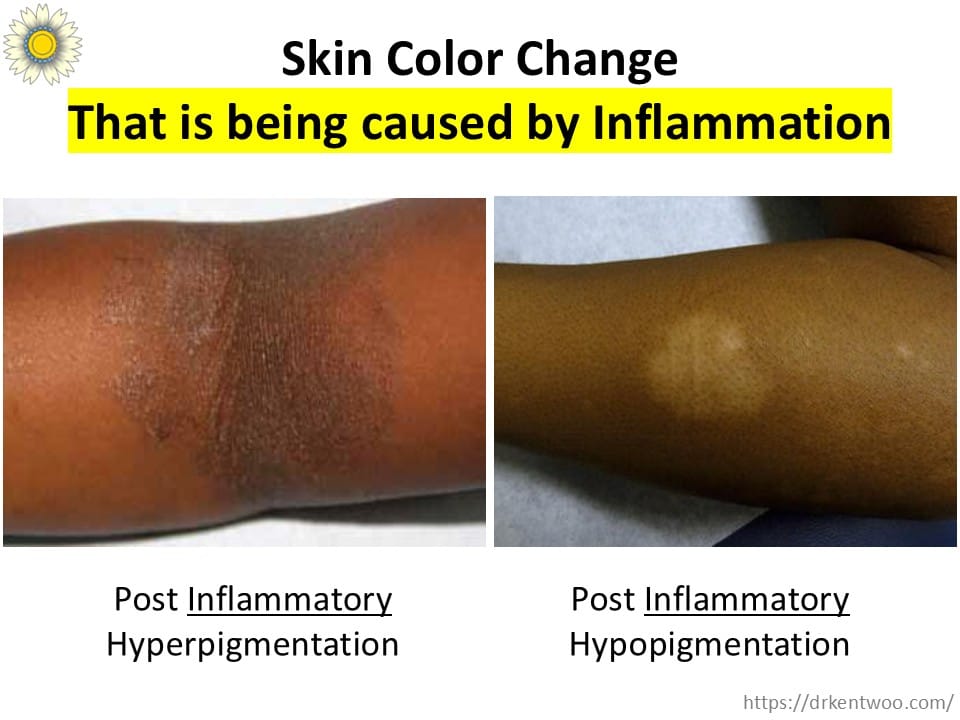
Eczema itself can leave dark or light patches after inflammation settles.
This is called post-inflammatory pigmentation or hypopigmentation.
So when someone notices a change in skin color, we need to ask:
Was it the cream—or the inflammation?
Topical steroids can occasionally cause local skin changes, particularly with prolonged or inappropriate use, but pigmentation changes are not an inevitable consequence of using steroid cream.
❌ Myth #4: “Steroids will make me hairy.”
Very uncommon.
Topical corticosteroids can occasionally cause increased fine hair growth at the treated area, particularly with prolonged use.
But it is uncommon and generally reversible.
It is not something that happens to everyone using steroid cream.
❌ Myth #5: “Steroids stop me—or my child—from outgrowing eczema.”
There is no evidence that topical steroids determine whether someone outgrows eczema.
Eczema can improve as a child gets older as part of the natural course of the disease.
Topical steroids are used to control inflammation.
They are not there to decide how long someone will have eczema.
❌ Myth #6: “If I just moisturize more, I don’t need steroids.”
Not necessarily.
Moisturizers are an essential part of eczema care.
They help maintain the skin barrier and reduce dryness and cracking.
But moisturizer and anti-inflammatory treatment do different jobs.
Moisturizer supports the skin barrier.
Steroid cream controls inflammation.
When the skin is dry but relatively calm, regular moisturizing may be enough.
But when the skin becomes red, itchy and inflamed, moisturizer alone may not adequately control the inflammation.
That’s where an anti-inflammatory treatment may be needed.
So don’t think of it as:
Moisturizer versus steroid.
Often, it is:
Moisturizer plus the right anti-inflammatory treatment.
❌ Myth #7: “You should only use a teeny-tiny bit.”
Please don’t underdose.
Yes, apply a thin layer.
But thin does not mean microscopic.
The medication needs to cover the inflamed skin adequately.
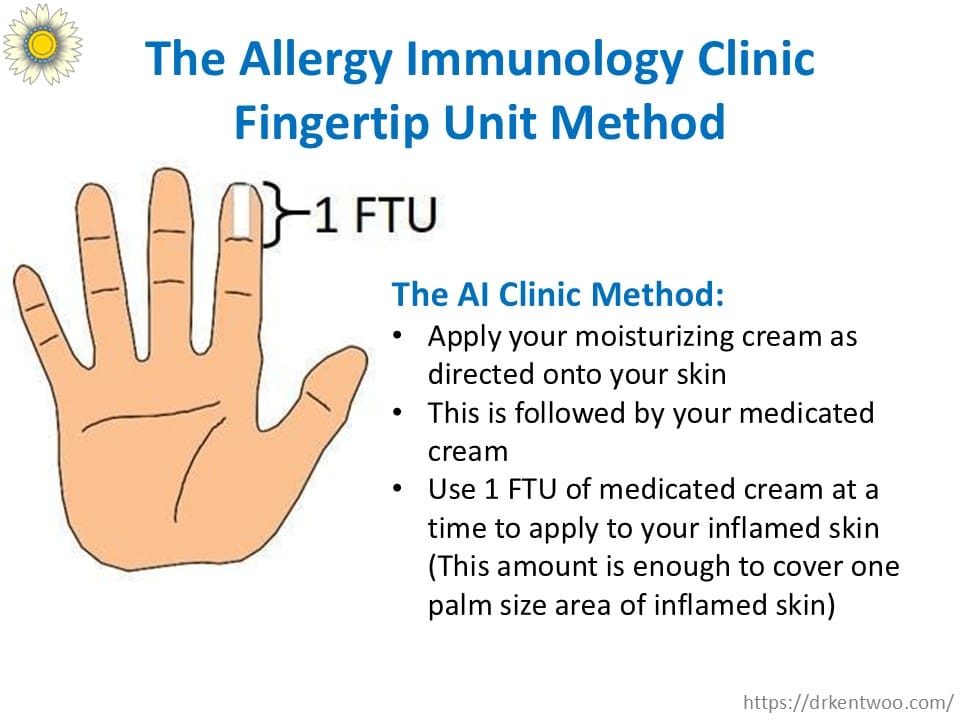
At the Allergy Immunology Clinic, we use our AI Fingertip Unit rule:
One fingertip of medicated cream treats approximately one hand-sized area of inflamed skin.
Too little, and the eczema may not improve.
Then people conclude:
“Steroids don’t work for me.”
Sometimes the problem isn’t the steroid.
It’s the amount being used.
Don’t Let Fear Get in the Way of Good Treatment
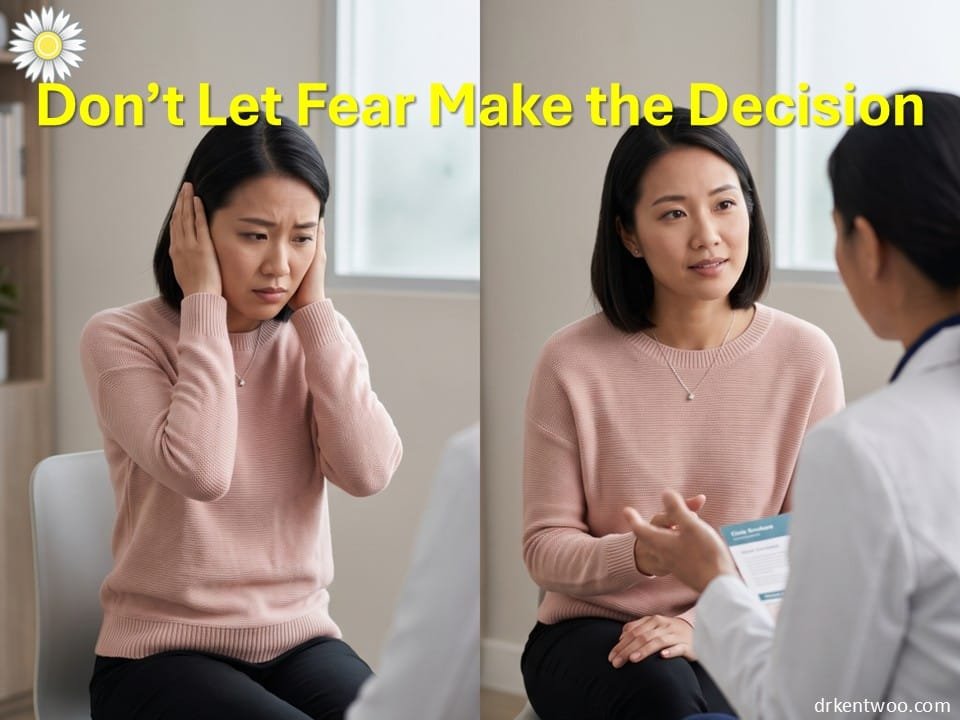
I don’t want my patients to use steroids blindly.
But I also don’t want them to suffer because they are afraid of using them.
There is a difference between caution and fear.
Caution asks:
“How do I use this safely?”
Fear says:
“I must never use this.”
Those are very different questions.
So instead of asking:
“Are steroids dangerous?”
Ask:
“Which steroid? What strength? Where? How much? How often? And for how long?”
Now we have something we can work with.
The goal isn’t to use more medication.
And it isn’t to avoid medication at all costs.
It is to use the right treatment, in the right way, at the right time.
That’s where proper medical guidance matters.
Should You Be Worried About Topical Steroid Withdrawal?
Let’s keep this part clear.
Topical Steroid Withdrawal (TSW) is a real clinical concern.
But:
- Not everyone who uses topical steroids develops TSW.
- Not every flare after stopping steroids is TSW.
- TSW most often occurs after prolonged use of high-potency steroid creams.
If you are concerned about TSW, don’t try to diagnose it from social media.
Get the skin assessed.
👉 [Read: Topical Steroid Withdrawal: What You Need to Know]
Information You Can Use
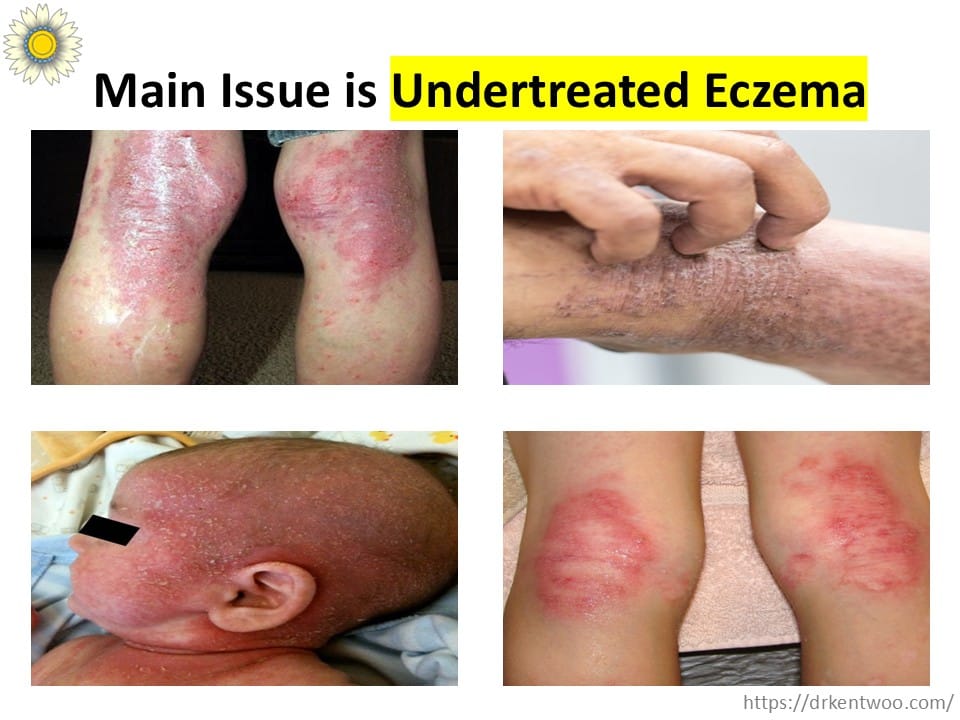
Fear of steroids has led some people to suffer longer than they need to.
But fear should never be louder than facts.
Yes topical steroids have risks, particularly when they are used inappropriately.
But poorly controlled eczema has consequences too.
The itching.
The scratching.
The broken skin.
The disturbed sleep.
The impact on everyday life.
What I want for you is:
💡 Confidence, not confusion.
🛠️ Tools, not fear.
✨ Control, not chaos.
Let’s have an open, science-backed conversation.
Let us treat your skin – Not just your fears.
Related reading: