
Understanding How Allergy Testing Can Help

Could allergies be contributing to your symptoms?
An allergy test may help provide answers.
But the test is only the beginning.
If you’ve ever wondered…
Why does my eczema keep coming back?
Why am I always sneezing?
Why does my child keep wheezing despite treatment?
Could certain foods be causing my symptoms?
…you’re not alone.
Many people live with recurring symptoms for years without knowing whether allergies are playing a role.
What matters is understanding what your results mean.
And what to do next.
At the Allergy Immunology Clinic, we interpret your test results together with your symptoms, medical history and examination.
This helps us:
✅ Identify relevant allergy triggers
✅ Rule out unlikely causes
✅ Avoid unnecessary restrictions or treatments
✅ Guide more targeted treatment
The “Sinus” That Never Ends

Another patient:
“Doctor, I always have blocked nose. Every day.”
Not just flu. Not just sinus.
- Morning congestion
- Sneezing fits
- Worse in the bedroom
Classic allergic rhinitis.
But here’s the thing:
Most people treat symptoms…
without identifying the trigger.
👉 Dust mites?
👉 Pets?
👉 Mold?
In these situations, allergy testing may help identify relevant triggers for treatment.
[Click here: From Allergy Testing to Treatment: Understanding Immunotherapy]
The Eczema That Won’t Settle

A patient once told me:
“Doctor, I’ve changed creams so many times… it improves, then flares again.”
We talked.
Turned out:
- Flare-ups after playing with their pet
- Worse in certain environments
- No clear pattern… until we looked deeper
Sometimes eczema is not just “skin deep”.
Managing the skin alone may not address the factors contributing to repeated flare-ups.
👉 Sometimes there may be contributing factors,
Such as environmental allergens, irritants, or, in selected cases, food.
Identifying whether any of these are relevant can help guide management.
[Click here: To Understand the Role of Food Allergy and Eczema]
The Asthma That Keeps Flaring

A parent once asked me:
“Why does my child keep wheezing… even with inhalers?”
We looked deeper.
Common triggers were present:
Bedding
Environment
Sometimes household chemicals
Asthma is not just lungs.
👉 Allergy can be a major contributor to airway inflammation
And if you don’t identify the triggers… you’re always one step behind.
[Click Here: How Allergy Testing Can Help Children with Coughing and Wheezing]
The Food That “Might” Be the Problem

This one is very common.
“Doctor, I think I’m allergic to something… but I don’t know what.”
So what happens?
- Avoid everything
- Eat less
- Live in fear
Or worse…
Avoiding foods that were never the real problem.
👉 This is where careful allergy assessment can help bring clarity
Not fear.
Not guessing.
Just answers.
[Click here: To Understand How Food Immunotherapy can Help Food Allergies]
What Do Allergy Test Results Mean?
This might surprise you.
A positive allergy test does not always mean you have an allergy.
Imagine two people who both test positive to peanuts.
One develops hives and swelling shortly after eating peanuts.
The other eats peanuts regularly without any problems.
Same positive test. But two very different situations.
The first may have a genuine peanut allergy.
The second may simply be sensitised to peanuts without being clinically allergic.
This is why allergy test results must be interpreted together with your symptoms and medical history.
And if your test is negative?
We may need to consider other causes of your symptoms rather than simply ordering more allergy tests.
👉 The goal is not to treat a positive test.
It is to treat the patient.
Which Allergy Test is Right For You?
If allergy testing is appropriate, there are two main options:
1. Blood Allergy Testing
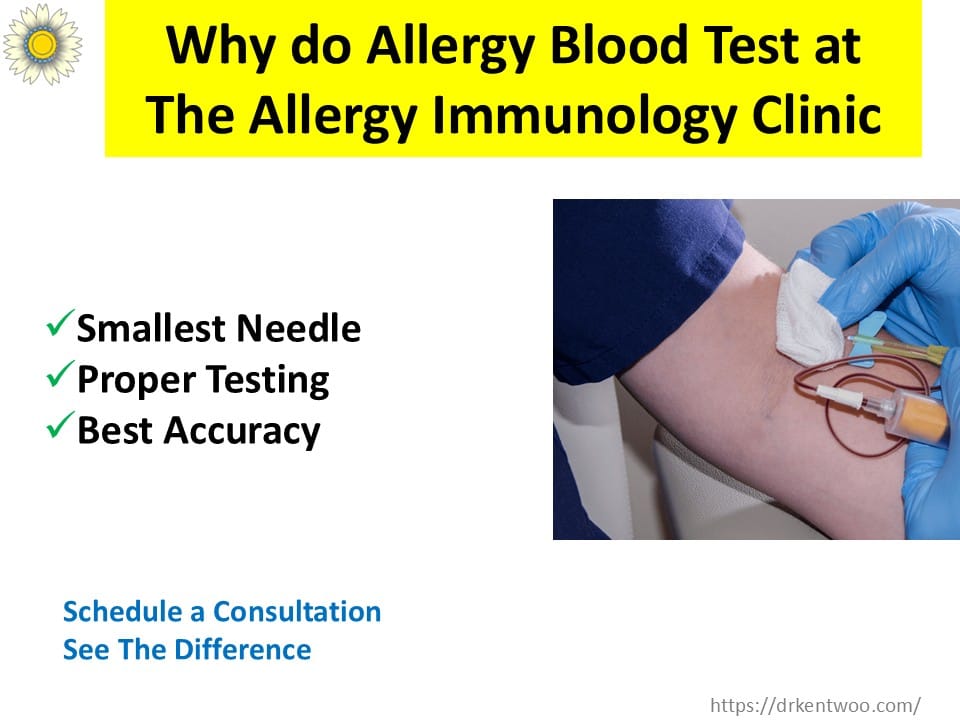
- No fasting required
- No need to stop antihistamines
- Useful for a wide range of allergens
[Click here: To Find Out About Our – 2 Hours Allergy Blood Test]
Some patients will ask:
“Doctor… must take blood ah?”
Yes, but for those afraid of blood tests, we have…
2. Skin Prick Testing
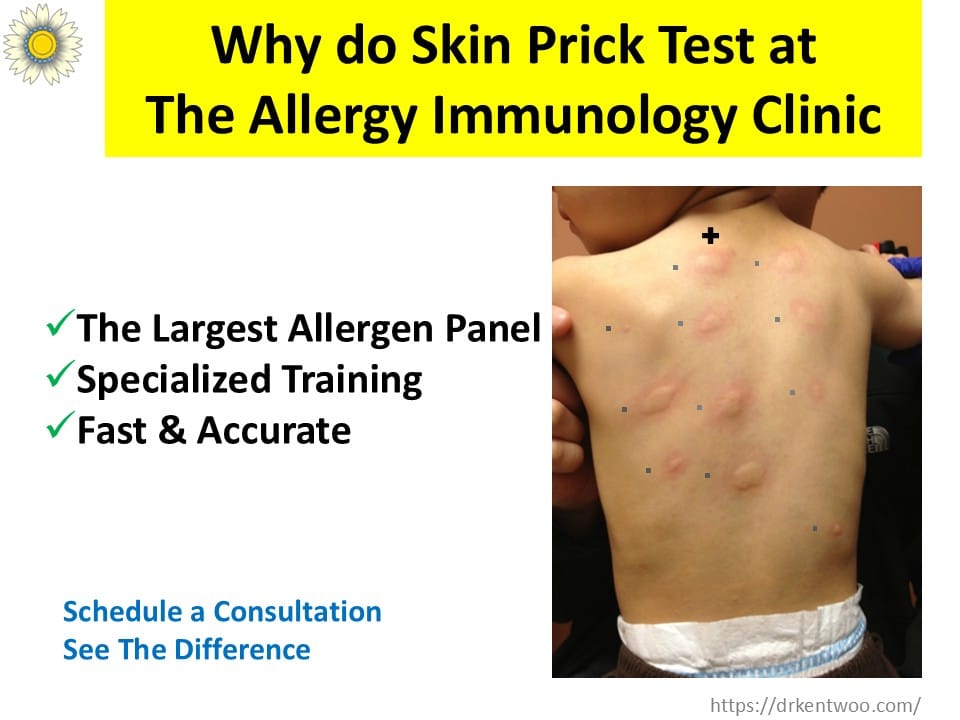
- Quick procedure
- Minimal discomfort
- Results available shortly after testing
We’ll explain the advantages and limitations of each and help you decide which is most suitable.
Because the most important part isn’t the test itself.
It’s understanding what the results actually mean.
Why Come to the Allergy Immunology Clinic?
Getting an allergy test is one thing.
But not everyone can interpret it for your symptoms.
And provide proper management
At the Allergy Immunology Clinic, we look beyond the test report.
We give you a complete evaluation to understand what may be contributing to your condition.
Sometimes that means identifying an allergy trigger.
Sometimes it means ruling out an unlikely cause.
And sometimes it means recommending a different approach to treatment.
Because our goal is not simply to give you an allergy test report.
It is to understand what is driving your symptoms
And what we can do next to help you get better, step by step.
📲 WhatsApp us to arrange an Allergy & Immunology consultation.