
Understanding the Allergic March

It often starts with the skin.
A baby develops eczema.
Then perhaps a food allergy appears.
Later, allergic rhinitis.
And sometimes, asthma.
This pattern is often called the “Allergic March” or “Atopic March.”
But there is an important point:
Not every child follows the same path.
It is not a fixed timetable that every child will follow.
And this brings me to a question I am often asked:
“Why do you focus so much on eczema?”
The answer is simple.
Because the skin may be where the story begins.
Why Does Eczema Matter?
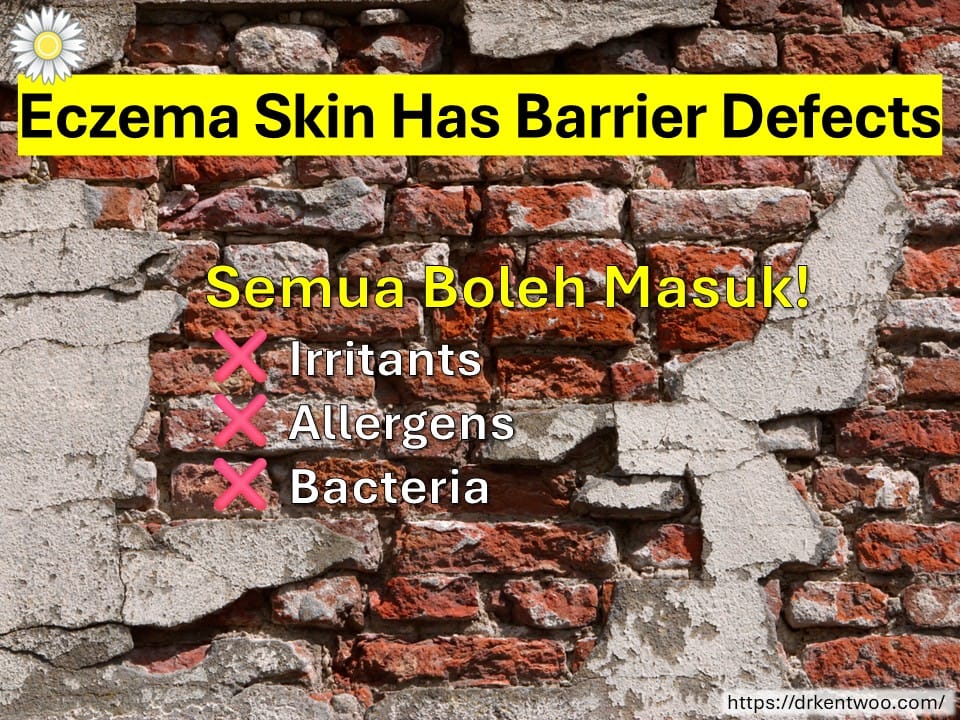
Eczema is more than an itchy rash.
When the skin barrier is damaged, it becomes leaky.
In children with eczema, this can contribute to sensitization to foods and other allergens.
So when I see a young child with significant eczema,
I’m not only thinking about how to control the itch.
I’m thinking about the bigger picture.
What else might this child be at risk of developing?
And what can we do now?
👉 [Learn about: Skin Moisturizing Tips]
Food Allergy: Don’t Delay Foods Without Reason
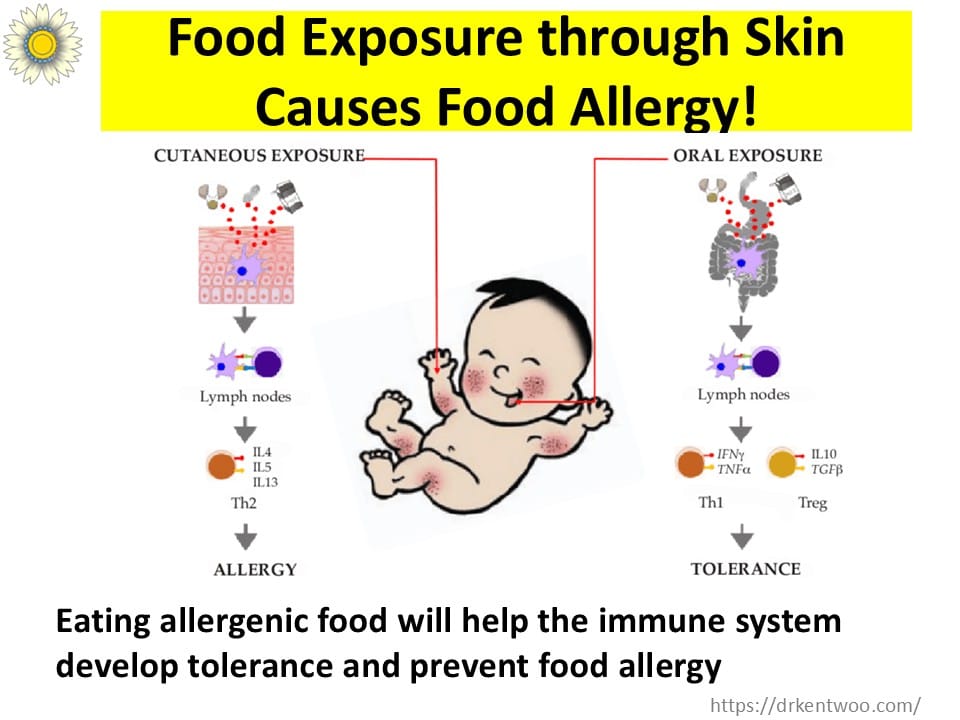
We used to worry about giving babies allergenic foods too early.
Our understanding has changed.
Early introduction of appropriate foods can help reduce the risk of food allergy.
And there is another point parents often don’t realize:
What we put on the skin matters too.
In children with eczema, be cautious with skincare products containing food proteins.
Repeated exposure through inflamed skin may contribute to sensitization.
The priority is simple:
Protect the skin barrier. Control the inflammation.
👉[Learn about: How food in skin care products can cause food allergy]
The Nose and the Lungs: One Airway
Then there is another important connection.
The nose and the lungs are not separate systems.
This is the concept of United Airway Disease.
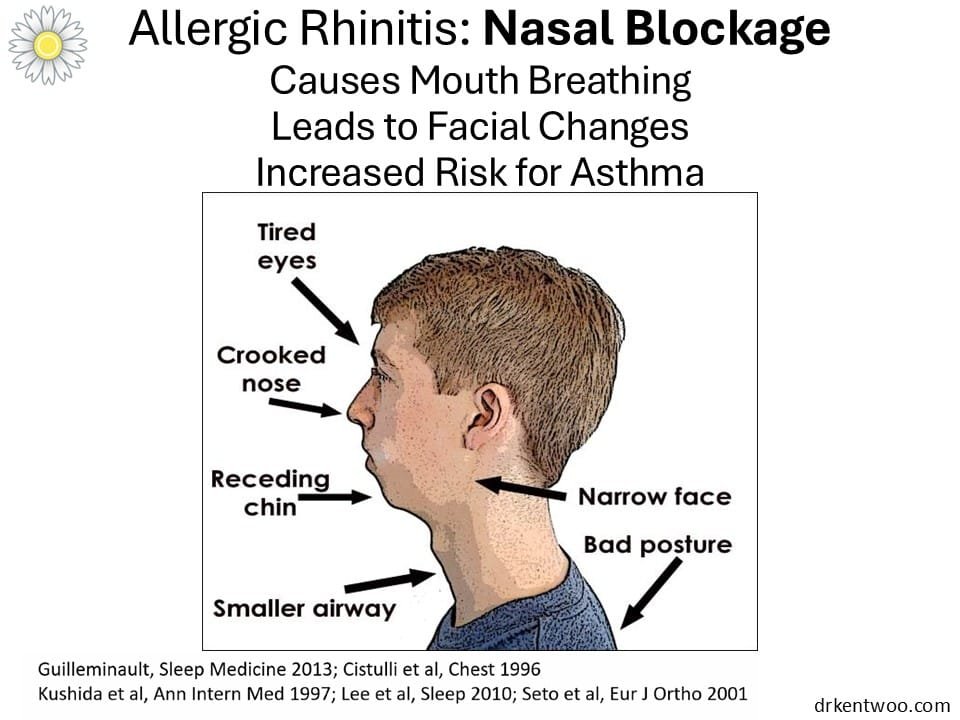
A child with allergic rhinitis may have persistent nasal congestion.
The nose becomes blocked.
The child starts breathing through the mouth.
Chronic mouth breathing can affect sleep and, in some children, facial and dental development.
The Nagahama Study showed that mouth breathing is associated with increased risk for the development of Asthma.
But there is another reason I pay attention to the nose.
The lower airway matters too.
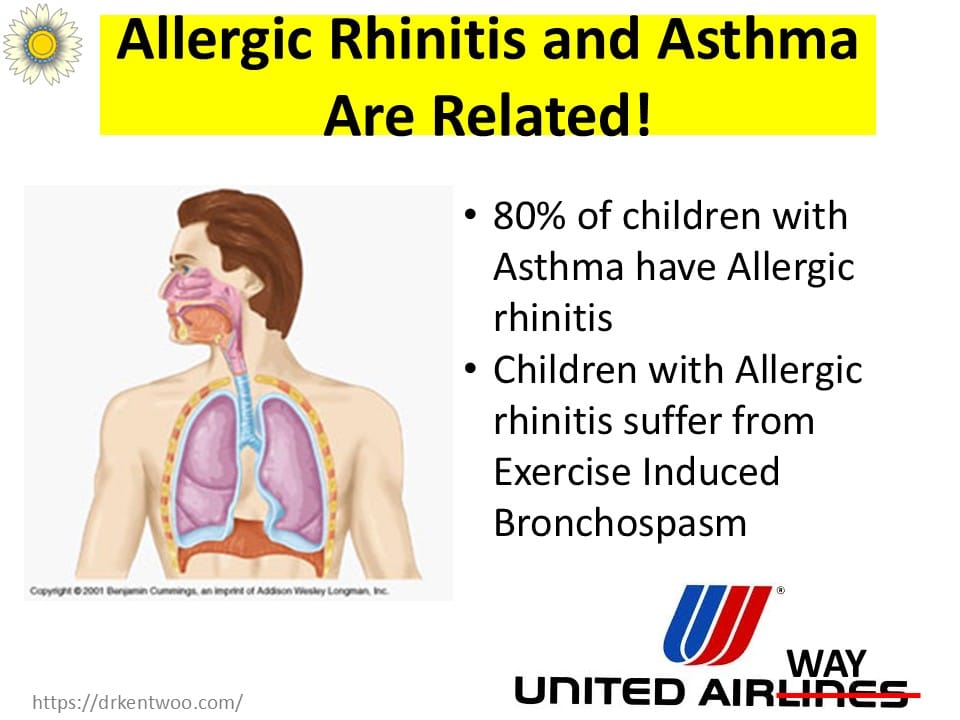
Allergic rhinitis and asthma commonly occur together.
So when I see a child with significant allergic rhinitis, I don’t just ask:
“How is your nose?”
I also ask:
“Do you cough when playing sports?”
And if a child has asthma, I want to know:
“How is your nose?”
Sometimes, treating the nose is an important part of managing the lungs.
Steroid Phobia: When Fear Gets in the Way

Another topic that comes up repeatedly is steroid phobia.
Let me put it simply:
Steroids are neither good nor bad.
They are a tool.
The important questions are:
Which steroid? What dose? Where? How often? And for how long?
Used appropriately and under medical guidance, corticosteroids are an important treatment for inflammatory allergic diseases.
Sometimes, patients don’t need another medication.
They simply need someone to explain why the medication is being used and how to use it properly.
And sometimes, they need time to digest the information.
That’s okay too.
👉 [Understanding Topical Steroid Withdrawal]
In Asthma, Fear can Backfire
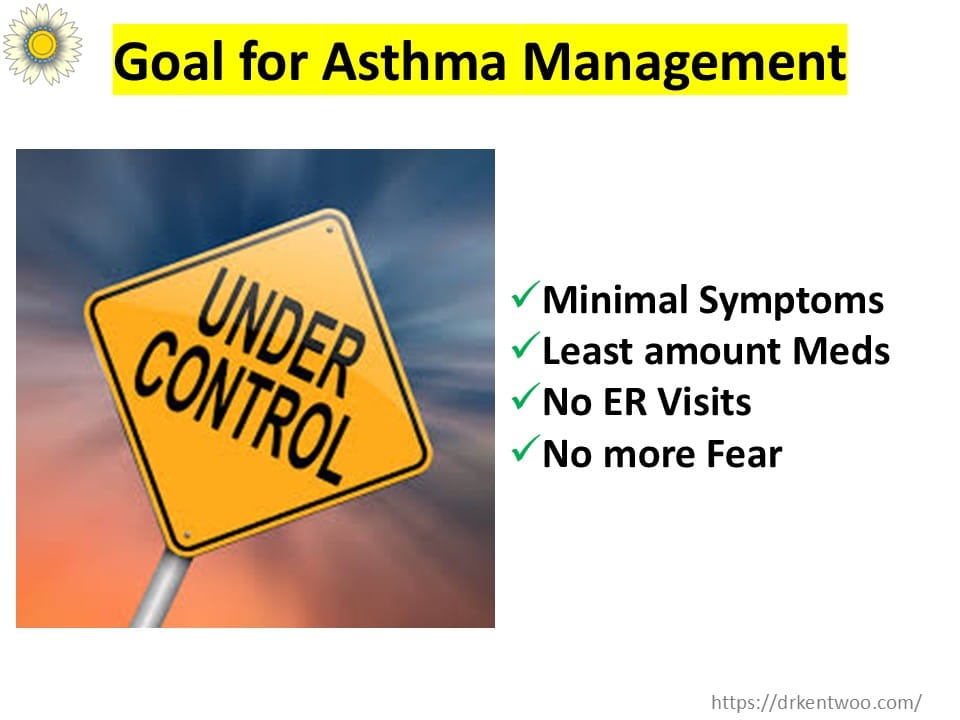
Some people avoid their inhaled corticosteroid because they are worried about steroids.
But uncontrolled asthma is not harmless.
If controller medication is avoided and a severe asthma attack occurs, systemic corticosteroids may be needed as rescue treatment.
The steroid exposure from a rescue course can be substantially greater than that from regular inhaled corticosteroid treatment.
The goal isn’t to avoid steroids at all costs.
It is to use the right treatment, at the right dose, for the right patient.
👉 [Growth Concerns About Asthma Medications]
Can We Change the Course of Allergic Disease?
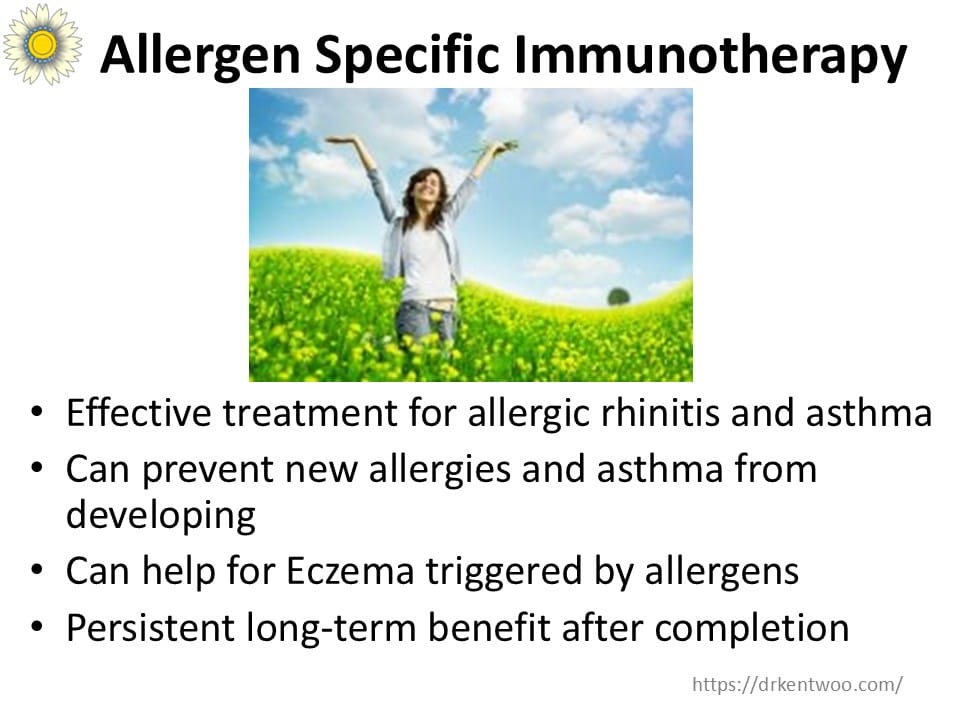
This is where allergen-specific immunotherapy comes in.
Immunotherapy works by repeatedly exposing the immune system to the relevant allergen in controlled doses.
The aim is to change the allergic response.
It can reduce symptoms and medication requirements, with benefits that may persist after treatment.
It is not suitable for everyone.
But in the right patient, it can be an important long-term, disease-modifying treatment.
The Bigger Picture
The Allergic March is not a guarantee of what will happen to a child.
But it gives us something valuable:
A reason to look ahead.
When a child develops significant eczema, we shouldn’t only treat the itch.
When food allergy is suspected, we should diagnose it properly.
And for some patients with food allergy,
Food immunotherapy can be part of the treatment.
When a child has persistent allergic rhinitis, we should think about the lungs.
And when asthma is present, we should not let fear of treatment stand in the way of good control.
Allergy care isn’t always just about treating what is happening today.
Sometimes, it’s about understanding what may come next.
Knowing that we can sometimes change the story.
Need help managing allergies? Contact Allergy Immunology Clinic.